E-commerce has transformed the way people shop, sell products, and do business around the world. Today, customers can purchase almost anything online, from clothing and electronics to groceries, digital products, and professional services. With just a smartphone or computer, buyers can explore thousands of products, compare prices, and complete transactions without visiting a physical store.
For entrepreneurs and established businesses, e-commerce offers exciting opportunities to reach new customers, expand into international markets, and increase revenue. Whether you are starting a small online shop or building a large digital retail brand, understanding how electronic commerce works is an important first step toward long-term success.
In this guide, you will discover what e-commerce means, how online businesses operate, the different business models, their benefits and challenges, and practical strategies for building a successful online store.
What Is E-commerce?
E-commerce, also known as electronic commerce, refers to the buying and selling of products or services through the internet. Transactions typically take place through websites, online marketplaces, mobile applications, and other digital platforms.
Unlike traditional retail businesses, an e-commerce store does not always need a physical storefront. Customers can browse product listings, read descriptions, select payment methods, and place orders from almost anywhere with an internet connection.
Common examples of e-commerce include:
- Online clothing and fashion stores.
- Electronics and smartphone retailers.
- Online grocery and food delivery services.
- Digital products such as e-books, courses, and software.
- Online marketplaces connecting buyers and sellers.
- Subscription-based products and services.
E-commerce has become an important part of the global economy because it makes shopping more convenient and allows businesses to operate beyond geographical boundaries.
How Does E-commerce Work?
An e-commerce transaction involves several steps that connect customers, online sellers, payment providers, and delivery services. Although the process may look simple from the customer’s perspective, multiple systems work together to complete each purchase.
1. Customers Visit an Online Store
The process begins when customers discover an online shop through search engines, social media, advertisements, email campaigns, or direct website visits. They can explore product categories, search for specific items, and compare available options.
2. Customers Select Products
After finding a suitable product, customers review its photographs, descriptions, prices, specifications, and customer reviews. They can then add their preferred items to a digital shopping cart.
3. Customers Complete the Checkout Process
During checkout, buyers provide their delivery information and choose an available payment method. Depending on the store, payment options may include credit cards, debit cards, digital wallets, bank transfers, or cash on delivery.
4. The Business Processes the Order
Once payment is confirmed, the store receives the order and begins preparing the products. Inventory systems help businesses track stock levels, while order management software organizes customer purchases.
5. Products Are Delivered to Customers
Physical products are packaged and shipped through courier or logistics services. Customers may receive tracking information to monitor their deliveries. For digital products, access or download instructions can often be provided immediately.
Different Types of E-commerce Business Models
Not every online business operates in the same way. E-commerce includes several business models based on the relationship between buyers and sellers.
Business-to-Consumer (B2C)
B2C is one of the most familiar e-commerce models. It involves businesses selling products or services directly to individual consumers. Examples include online fashion stores, electronics retailers, and beauty product websites.
This model is suitable for entrepreneurs who want to build a recognizable brand and sell products directly to everyday customers.
Business-to-Business (B2B)
B2B e-commerce involves transactions between two businesses. For example, a wholesale supplier may sell products in bulk to retailers through an online ordering platform.
These transactions often involve larger order quantities, negotiated prices, business accounts, and recurring purchases.
Consumer-to-Consumer (C2C)
C2C e-commerce allows individuals to sell products or services to other individuals through online marketplaces. Common examples include secondhand clothing platforms, used electronics marketplaces, and community selling websites.
The platform usually provides tools for product listings, communication, payments, and sometimes buyer protection.
Consumer-to-Business (C2B)
C2B describes situations where individuals provide products or services to businesses. Freelancers, photographers, content creators, and independent consultants often use this model.
For example, a freelance graphic designer may sell design services to a company through an online platform.
Benefits of Starting an E-commerce Business
Online selling provides several advantages compared with operating exclusively through traditional retail channels. While success requires planning and consistent effort, the digital business environment offers opportunities for businesses of different sizes.
1. Reach More Customers
A physical shop usually serves customers within a particular geographical area. An online store can attract buyers from different cities, regions, and countries, depending on its shipping capabilities and marketing strategy.
2. Lower Operating Costs
Many e-commerce businesses can operate without renting expensive retail spaces. Entrepreneurs may also use third-party fulfillment services, cloud-based software, and automated tools to manage daily operations.
However, online businesses still have expenses such as website hosting, marketing, inventory, transaction fees, and shipping.
3. Convenient Shopping Experience
Customers can shop at any time without traveling to a physical location. This convenience makes online shopping attractive to people with busy schedules and different shopping preferences.
4. Better Customer Insights
Digital analytics tools help business owners understand customer behavior. They can identify popular products, monitor website traffic, analyze purchasing patterns, and measure marketing performance.
5. Opportunities for Business Growth
An online store can expand its product catalog, introduce new services, and target additional customer segments. Businesses can also experiment with different marketing channels without opening new physical locations.
Popular E-commerce Platforms for Building an Online Store
Choosing the right e-commerce platform is an important decision when launching an online business. The best option depends on your budget, technical experience, product types, and business goals.
Shopify
Shopify is a hosted e-commerce platform designed to help businesses create and manage online stores. It offers website templates, product management, payment integrations, and marketing features.
It can be a convenient option for beginners who want an integrated solution without managing their own server infrastructure.
WooCommerce
WooCommerce is an e-commerce plugin for WordPress. It allows website owners to transform a WordPress website into an online store with product pages, shopping carts, checkout features, and extensions.
It offers flexibility and customization options, although users need to consider hosting, maintenance, security, and plugin compatibility.
BigCommerce
BigCommerce provides hosted online selling tools for businesses of different sizes. Its features include product management, store customization, integrations, and multichannel selling capabilities.
Online Marketplaces
Marketplaces provide another way to sell products without building an independent online store from scratch. Sellers can list products on established platforms and access their existing customer audiences.
However, marketplace sellers should understand platform fees, competition, selling policies, and customer ownership limitations.
Essential Features Every Successful E-commerce Website Needs
A professional online store should make shopping simple, secure, and enjoyable. Customers are more likely to complete purchases when they can easily find information and trust the website.
Consider including these essential features:
- Responsive design: Make sure your website works smoothly on smartphones, tablets, and desktop computers.
- Clear product descriptions: Explain product benefits, specifications, sizes, materials, and other important details.
- High-quality images: Use clear photographs that help customers understand what they are buying.
- Secure checkout: Protect customer information and use trusted payment processing services.
- Easy navigation: Organize products into logical categories and provide useful search filters.
- Transparent shipping information: Display delivery costs, estimated shipping times, and available shipping methods.
- Return policies: Explain how customers can request exchanges, refunds, or returns.
- Customer support: Provide accessible contact options to answer questions and resolve problems.
These features improve usability and help establish credibility, especially when customers are purchasing from an unfamiliar brand.
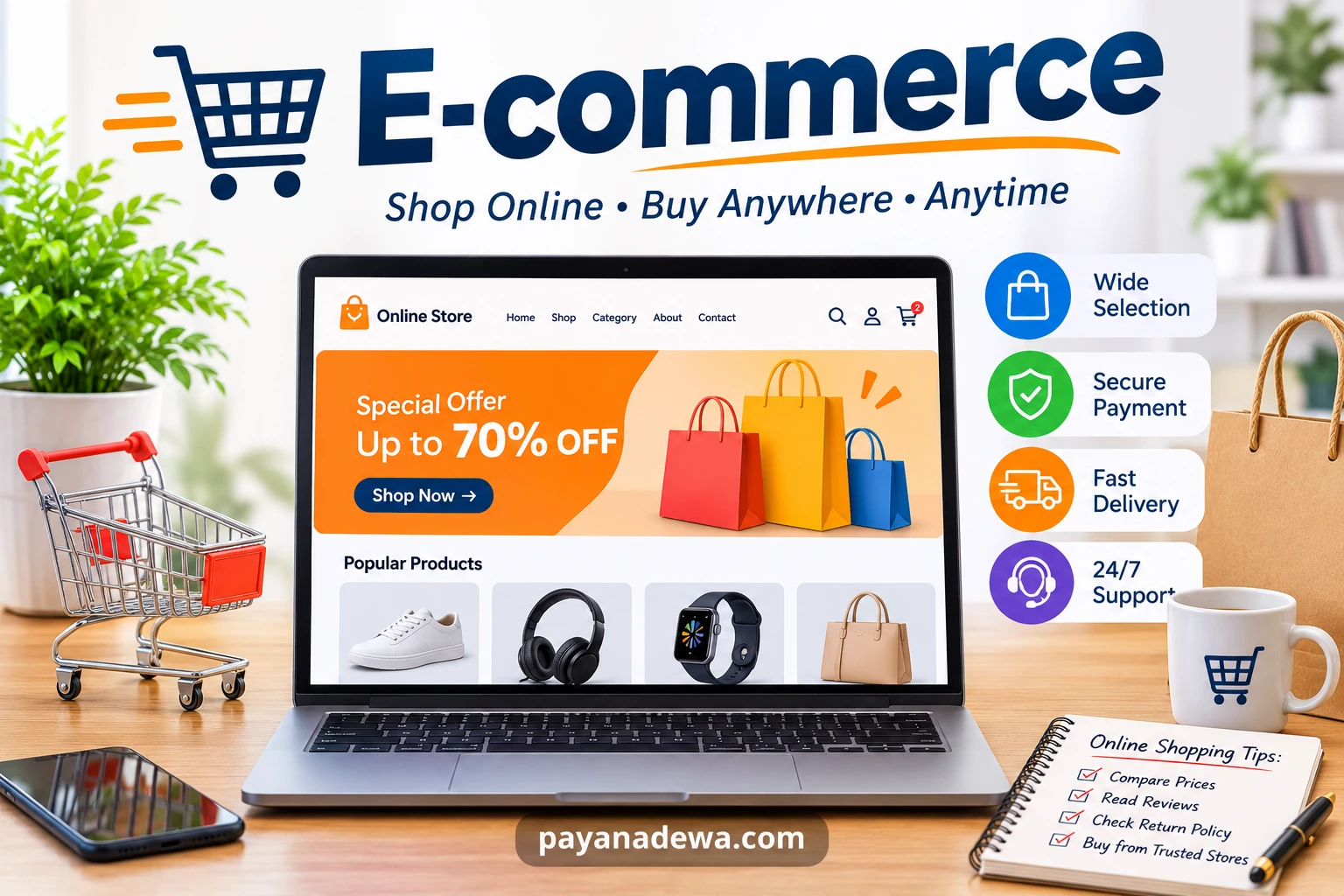
Use this e-commerce visual as a practical reference when planning your online store, organizing product categories, and creating a convenient shopping experience for customers.
Practical Tips for Growing an E-commerce Business
Launching an online store is only the beginning. To attract customers and generate consistent sales, business owners need a strategy that combines product quality, customer experience, and effective digital marketing.
1. Research Your Target Market
Before choosing products, identify the people you want to serve. Research their interests, shopping habits, purchasing power, and common problems.
Understanding your target audience helps you choose suitable products, develop competitive prices, and create marketing messages that connect with potential buyers.
2. Choose Products With Real Demand
Look for products that solve problems or offer clear value. Research competing stores, customer reviews, market trends, and product demand before investing in inventory.
Avoid selecting products based only on temporary popularity. Consider quality, supplier reliability, profit margins, and the potential for repeat purchases.
3. Optimize Your Website for SEO
Search engine optimization helps potential customers discover your online store through organic search results. Use relevant keywords naturally in product titles, category descriptions, page headings, and informative blog articles.
Other important SEO practices include:
- Writing unique product descriptions.
- Creating descriptive page titles and meta descriptions.
- Compressing images to improve website loading speed.
- Using clear website navigation and internal links.
- Creating useful content that answers customer questions.
- Making your website mobile-friendly.
- Using descriptive image alt text.
4. Build Trust With Customers
Trust is essential for online transactions. Display accurate business information, clear contact details, transparent policies, and genuine customer feedback.
Never use misleading product photographs or make promises that your business cannot fulfill. A trustworthy reputation can encourage repeat purchases and positive recommendations.
5. Use Social Media Marketing
Social media platforms help online businesses introduce products, communicate with customers, and increase brand awareness. Choose platforms that match your target audience and product category.
Share product demonstrations, useful tutorials, customer testimonials, promotional campaigns, and behind-the-scenes content to build stronger relationships with potential buyers.
6. Monitor Business Performance
Track important performance indicators to understand whether your strategies are working. Useful metrics include website traffic, conversion rate, average order value, customer acquisition cost, and repeat purchase rate.
Review these numbers regularly and use the results to improve product selection, pricing, website design, and marketing campaigns.
Common E-commerce Challenges and How to Overcome Them
Although online selling offers many opportunities, it also comes with challenges. Understanding these issues early can help business owners prepare better solutions.
Strong Market Competition
Online customers can compare many sellers within seconds. To stand out, develop a clear brand identity, provide excellent service, and communicate what makes your products valuable.
Shopping Cart Abandonment
Some customers add products to their shopping carts but leave before completing their purchases. Unexpected fees, complicated checkout forms, and limited payment options can contribute to this problem.
Simplify the checkout process, display costs clearly, and offer convenient payment methods to reduce unnecessary friction.
Shipping and Inventory Management
Late deliveries and inaccurate inventory information can damage customer relationships. Use reliable suppliers, maintain accurate stock records, and communicate realistic delivery estimates.
Cybersecurity and Data Protection
Online stores handle sensitive information, making security an important responsibility. Use HTTPS, reliable hosting, strong administrator passwords, regular software updates, and trusted payment providers.
Businesses should also follow applicable privacy and consumer protection regulations in the markets where they operate.
The Future of E-commerce
The e-commerce industry continues to evolve as technology and customer expectations change. Several developments are influencing how businesses sell products and how consumers shop online.
Artificial Intelligence and Personalization
Artificial intelligence can help businesses recommend relevant products, automate customer support, analyze shopping behavior, and improve marketing campaigns. Personalized experiences may make product discovery easier and more relevant.
Mobile Commerce
Mobile commerce, often called m-commerce, refers to shopping through smartphones and tablets. Fast mobile websites, convenient payment methods, and user-friendly shopping applications are becoming increasingly important.
Social Commerce
Social commerce combines social media experiences with online shopping. Customers can discover products through videos, creator recommendations, live shopping events, and integrated shopping features.
Sustainable Online Retail
Environmental awareness is encouraging some businesses to explore recyclable packaging, responsible sourcing, efficient delivery systems, and more sustainable product options.
Companies that communicate their sustainability efforts honestly may build stronger relationships with environmentally conscious customers.
Conclusion
E-commerce has created new opportunities for entrepreneurs, established companies, and consumers by making online transactions more accessible and convenient. From small independent stores to international marketplaces, digital commerce continues to reshape the global retail environment.
Building a successful online business requires more than simply creating a website. Business owners need to understand their customers, select valuable products, choose suitable technology, maintain website security, and invest in effective marketing strategies.
Start with a clear business plan, focus on customer satisfaction, and improve your store through regular performance analysis. With consistent effort and the right approach, e-commerce can become a valuable foundation for sustainable business growth.