A well-designed club flyer is one of the easiest ways to promote an organization, announce upcoming events, and attract new members. Whether you manage a school club, social group, sports organization, music community, or professional association, an effective flyer helps communicate your message quickly and professionally.
However, creating a successful flyer involves more than choosing attractive colors and adding a few pictures. You need a clear message, an organized layout, and important information that readers can understand at a glance. The right design can encourage people to attend an event, join your organization, or learn more about your community.
In this guide, you will discover how to create an attractive club flyer, what information to include, which design elements work best, and how to use printable templates to simplify the process.
What Is a Club Flyer?
A club flyer is a promotional document designed to introduce a club, advertise its activities, or invite people to participate in an event. It typically combines headlines, short descriptions, visual elements, and contact information in a single, easy-to-read layout.
Organizations use club flyers for different purposes, including recruiting members, announcing meetings, promoting social gatherings, and sharing important updates.
For example, a university organization might distribute a flyer during orientation week to introduce its activities to new students. Similarly, a sports club could use a promotional flyer to advertise training sessions and encourage beginners to register.
Unlike lengthy brochures, flyers focus on delivering essential information quickly. Therefore, every element should support the main promotional message.
Why Is a Good Club Flyer Important?
Promotional materials play an important role in building awareness and creating interest. A professionally designed club flyer helps organizations communicate their identity while making their activities more appealing.
1. Attract New Members
A visually appealing flyer can capture attention and encourage people to discover what your organization offers. Highlighting interesting activities, membership benefits, and upcoming opportunities makes joining feel more inviting.
2. Promote Upcoming Events
Flyers are useful for advertising meetings, workshops, competitions, celebrations, and social gatherings. They allow organizers to communicate event details without requiring readers to visit multiple websites.
3. Build a Recognizable Identity
Consistent colors, typography, logos, and graphic elements help create a recognizable club identity. When people repeatedly see the same visual style, they can more easily associate it with your organization.
4. Share Information Easily
Printed flyers can be displayed on noticeboards, distributed at events, or handed directly to potential members. Digital versions can also be shared through email, messaging applications, and social media.
Essential Elements Every Club Flyer Should Include
Before designing your promotional material, decide which information readers need most. A strong layout presents important details clearly without overwhelming the page.
Club Name and Main Headline
Start with the organization name or event title. Use a bold, readable headline that immediately communicates the purpose of the flyer.
Examples include:
- Join Our Student Club Today!
- Discover Your Passion at Our Music Club
- Become Part of Our Sports Community
- Meet New People at Our Social Club
Event Date, Time, and Location
If your flyer promotes an event, make the essential details easy to find. Include the date, starting time, venue, and any relevant registration deadlines.
Consider placing this information in a separate section using icons or contrasting background colors. This makes it easier for readers to locate important details.
Activities and Membership Benefits
Explain what participants can expect. Instead of writing a long paragraph, use short bullet points to describe activities and benefits.
- Weekly meetings and group discussions.
- Social activities and networking opportunities.
- Workshops and skill development.
- Sports competitions and creative projects.
- Opportunities to meet people with similar interests.
Contact Information and Call to Action
Every effective promotional flyer should tell readers what to do next. Add an email address, website, social media account, registration link, or QR code.
Use an action-oriented phrase such as “Join Today,” “Register Now,” or “Contact Us for Details.” A clear call to action makes the promotional message more effective.
Popular Club Flyer Design Ideas
Different organizations need different visual styles. Choosing a suitable design helps communicate the personality and purpose of your club.
School and University Club Flyer
Educational club flyers should feel welcoming, energetic, and easy to understand. Use bright colors, simple illustrations, and engaging headlines to appeal to students.
Popular themes include academic societies, photography clubs, science groups, debate organizations, and student communities.
Sports Club Flyer
Sports promotional flyers benefit from bold typography, dynamic compositions, and action-oriented imagery. Strong color combinations can create excitement while highlighting training schedules, competitions, and registration information.
Music and Entertainment Club Flyer
Music organizations can experiment with expressive typography, colorful backgrounds, sound-related graphics, and creative compositions. The design should reflect the atmosphere of the club and the experiences it offers.
Social and Community Club Flyer
Social organizations should focus on friendly visuals and welcoming messages. Photographs of group activities, approachable typography, and warm colors can make the organization feel more inclusive.
How to Design a Professional Club Flyer
You do not need advanced graphic design experience to create an attractive promotional document. Following a few practical design principles can help you achieve a polished result.
Step 1: Define Your Target Audience
Think about the people you want to reach. A flyer for university students may use a youthful and energetic style, while a professional association might benefit from a more formal appearance.
Understanding your audience helps you select the right language, images, colors, and overall layout.
Step 2: Choose a Suitable Layout
Organize your information into clear sections. Place the headline near the top, followed by the main promotional message, event details, activities, and contact information.
Avoid filling every available space. White space helps separate content and makes the design easier to read.
Step 3: Select Consistent Colors
Choose two or three primary colors that represent your organization. You can add a contrasting accent color to highlight important information, such as registration details or event dates.
Make sure the text has sufficient contrast against the background. For example, dark navy text on a white background is generally easy to read.
Step 4: Use Readable Typography
Choose fonts that match your club’s personality without sacrificing readability. A bold font works well for headlines, while a clean sans-serif typeface is suitable for supporting information.
Limit the number of font styles to two or three. Too many different fonts can make the flyer look disorganized.
Step 5: Add Relevant Images and Graphics
Visual elements help communicate your message and make the flyer more memorable. Select images that relate directly to your organization, event, or activities.
For example, a sports club could feature athletic imagery, while an art organization might use creative illustrations or colorful graphic elements.
Step 6: Review Before Printing
Check all details carefully before distributing your design. Make sure names, dates, addresses, email information, and registration links are correct.
Also, inspect the overall layout to ensure that important text is not too small or positioned too close to the page edges.
Why Use a Printable Club Flyer Template?
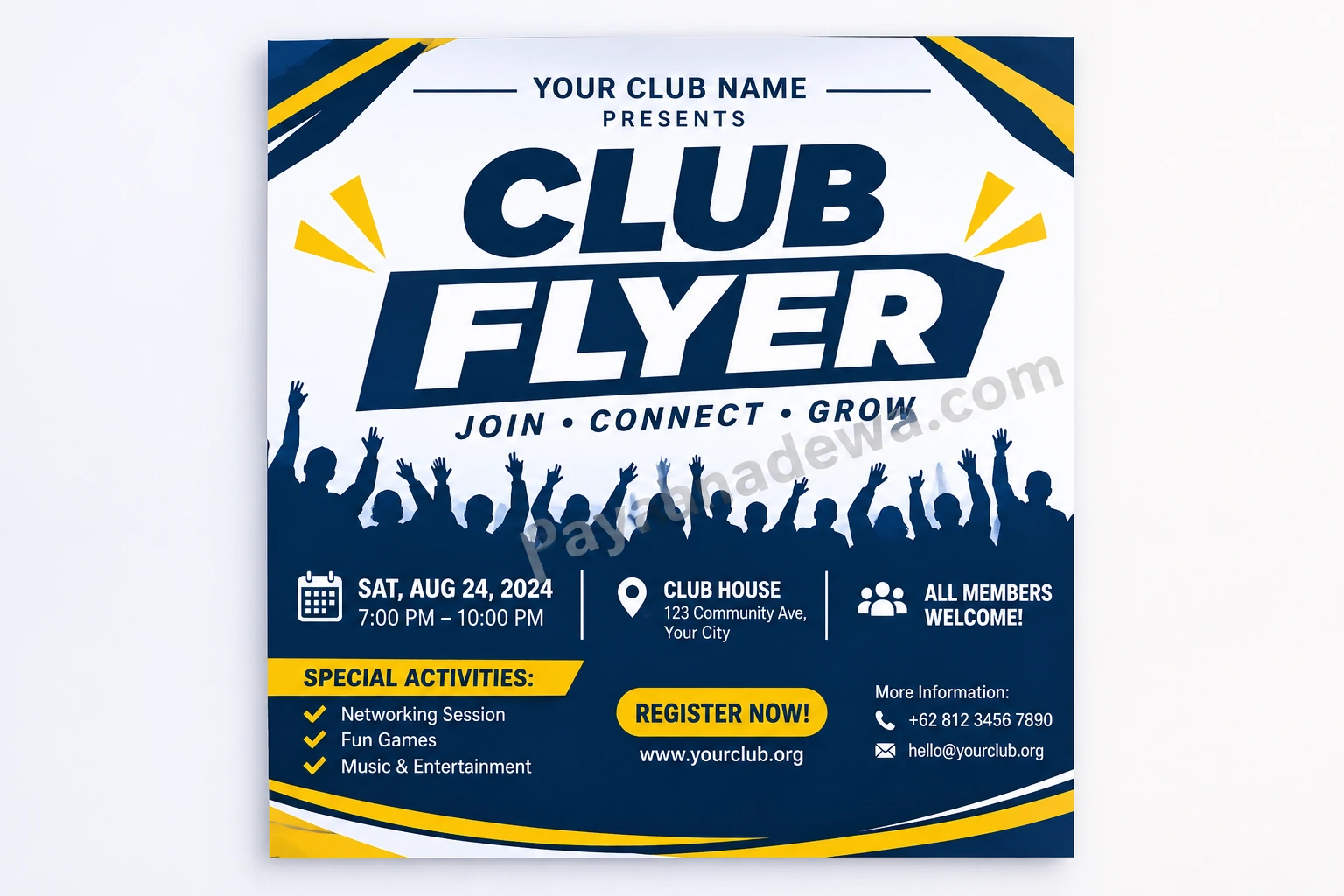
Starting a design from scratch can take considerable time. A printable club flyer template provides a convenient starting point with an organized structure and ready-to-customize sections.
Instead of building every element yourself, you can focus on adding your club’s information and adjusting the design to match your organization’s identity.
Here are some advantages of using a template:
- Saves time: Start with an existing layout instead of designing every section from the beginning.
- Easy customization: Change the text, colors, images, and contact information to suit your needs.
- Consistent appearance: Use a structured design to keep information organized.
- Beginner-friendly: Create professional-looking promotional materials without advanced design skills.
- Flexible distribution: Prepare designs for printing or digital sharing.
A printable template is particularly useful for organizations that regularly promote meetings, recruit members, or announce new activities.
Tips for Making Your Club Flyer More Effective
A good design should not only look attractive but also encourage readers to take action. Apply these practical tips to improve your promotional materials.
- Keep your message simple: Focus on one main purpose instead of promoting too many things at once.
- Use an attention-grabbing headline: Make the main benefit or event immediately clear.
- Highlight important details: Use visual hierarchy to emphasize dates, locations, and registration information.
- Avoid excessive decoration: Too many graphics can distract readers from the main message.
- Include a clear call to action: Tell readers exactly how to join, register, or contact your organization.
- Use high-quality graphics: Choose sharp images and avoid stretched or pixelated visuals.
- Check spelling and grammar: Proofread the entire flyer before sharing or printing it.
Best Formats and Sizes for Club Flyers
The right document size depends on where and how you plan to distribute your design.
Common flyer formats include:
- A4: A practical option for noticeboards, office displays, and general printing.
- A5: A smaller format that is convenient for handouts and promotional distribution.
- US Letter: A popular document size for printing in the United States.
- Digital format: Suitable for websites, email campaigns, and social media promotion.
For printed materials, use a high-resolution export and check your printer’s recommended margins and bleed settings. For digital sharing, optimize the image dimensions for the platform where your audience will see it.
Common Club Flyer Design Mistakes to Avoid
Even an attractive design can become ineffective if important information is difficult to understand. Watch out for these common mistakes:
- Using too much text in a limited space.
- Choosing colors with poor text contrast.
- Using decorative fonts for important information.
- Forgetting event dates, locations, or contact details.
- Adding unrelated images that do not support the message.
- Making the call to action difficult to find.
- Printing without checking the final document size and quality.
Remember that simplicity is often more effective than complexity. A well-organized flyer can communicate more clearly than a crowded design filled with unnecessary decorations.
Conclusion
A professional club flyer is a practical promotional tool for attracting new members, advertising events, and building a recognizable organization. With the right headline, clear information, appealing colors, and organized layout, you can create a design that captures attention and encourages people to participate.
Whether you are promoting a school organization, sports team, music community, or social group, using a printable club flyer template can make the design process faster and easier.
Start with a clear message, customize the layout to match your organization’s identity, and always review your design before printing or sharing it. With these simple steps, you can create an effective club flyer that helps your organization connect with the right audience.