Managing church finances is an important responsibility that requires careful planning, transparency, and wise decision-making. Whether you lead a small congregation or oversee a large ministry, having a clear church budget helps ensure that financial resources are used effectively to support worship, ministry programs, community outreach, and daily operations.
A well-organized church financial plan also helps church leaders prepare for future expenses, manage donations responsibly, and maintain financial stability. However, creating a budget can feel overwhelming, especially when multiple ministries and expenses need to be considered.
This guide explains how to create a practical church budget, identify important income and expense categories, and manage church finances throughout the year. You will also discover how a printable church budget template can make financial planning easier for pastors, treasurers, and church finance committees.
What Is a Church Budget?
A church budget is a financial plan that outlines the money a church expects to receive and how those funds will be allocated during a specific period. Most churches prepare an annual budget, although some also create monthly or quarterly financial plans.
The main purpose of a church budget is to ensure that available resources support the church’s mission and priorities. It provides a financial roadmap for leaders and helps prevent unnecessary spending.
A typical church budget includes:
- Income: Tithes, offerings, donations, grants, and fundraising revenue.
- Worship expenses: Music, worship supplies, equipment, and service-related costs.
- Ministry expenses: Children’s ministry, youth programs, small groups, and discipleship activities.
- Facility expenses: Utilities, cleaning, repairs, insurance, and maintenance.
- Administrative costs: Office supplies, software, communication, and professional services.
- Outreach expenses: Mission trips, charitable activities, community support, and evangelism.
By organizing these categories, church leaders can understand their financial position and make better decisions about spending priorities.
Why Is a Church Budget Important?
Financial planning is essential for churches of every size. Without a structured budget, it can become difficult to track expenses, allocate resources, and prepare for unexpected financial challenges.
1. Promotes Financial Transparency
A detailed budget helps church leaders explain how donations and other financial resources are being used. It also gives finance committees a clear overview of income and spending.
When financial information is organized and regularly reviewed, members can develop greater confidence in the church’s financial management.
2. Supports Ministry Growth
Every ministry needs resources to operate effectively. A church budget helps leaders identify which programs need financial support and how much funding is available.
For example, a growing youth ministry may need additional teaching materials, event supplies, or transportation funding. Including these needs in the annual budget makes planning easier.
3. Prevents Overspending
A budget establishes spending limits for different departments and activities. This helps ministry leaders understand their available resources before making purchases.
It also reduces the risk of unexpected expenses affecting essential church operations.
4. Prepares the Church for the Future
Churches need to prepare for building repairs, equipment replacement, emergency situations, and future ministry opportunities. A realistic financial plan makes it easier to set aside funds for these needs.
Common Church Budget Income Categories
The first step in creating a church budget is identifying all potential sources of income. Although every congregation is different, most churches receive financial support through several common channels.
Tithes and Offerings
Tithes and offerings are often the primary sources of church income. These contributions come from members and visitors who voluntarily support the church’s mission and activities.
When estimating this income, review previous financial records and consider seasonal patterns. Avoid assuming that donations will always increase from one year to the next.
Special Donations
Some churches receive additional contributions for specific purposes, such as building projects, missionary work, equipment purchases, or community assistance.
These donations should be recorded separately when they are restricted to a particular purpose.
Fundraising Activities
Church fundraising events can generate additional financial support. Examples include charity dinners, community events, sponsored activities, and fundraising campaigns.
When estimating fundraising income, consider the expected costs of organizing each event. The budget should focus on realistic net revenue rather than total sales.
Other Income
Depending on the church’s activities and applicable regulations, additional income may come from facility rentals, investment earnings, or other permitted sources.
Essential Church Budget Expense Categories
After estimating income, the next step is organizing expenses. A good church budget should reflect the congregation’s actual needs and ministry priorities.
Worship and Ministry
This category covers expenses directly related to church services and spiritual programs.
- Worship instruments and equipment.
- Music licenses and approved media resources.
- Communion supplies and service materials.
- Children’s and youth ministry activities.
- Bible study and discipleship resources.
Facilities and Maintenance
Church buildings require regular maintenance to remain safe, comfortable, and functional.
- Electricity, water, and internet bills.
- Cleaning supplies and maintenance services.
- Building repairs and improvements.
- Property insurance.
- Security and safety equipment.
Administration
Administrative expenses support the daily operation of the church. These costs may include office supplies, accounting services, communication tools, printing, and financial management software.
Outreach and Missions
Many churches dedicate part of their budgets to serving people outside their congregations. These activities may include food assistance, local charity programs, missionary support, and community development projects.
Emergency and Reserve Funds
Unexpected expenses can affect even well-managed churches. Therefore, consider establishing a reserve fund for urgent repairs, financial shortfalls, or other unforeseen situations.
The appropriate reserve amount depends on the church’s financial position, operating costs, and governing policies.
How to Create a Church Budget Step by Step
Creating a church budget does not have to be complicated. Following a consistent process can help church leaders prepare a realistic and useful financial plan.
Step 1: Review Previous Financial Records
Start by examining the previous year’s income and expenses. Identify spending patterns, recurring costs, unexpected purchases, and areas where the church exceeded its budget.
Historical financial information provides a useful starting point for estimating future needs.
Step 2: Estimate Expected Income
Calculate the church’s expected income using previous donation records, membership trends, fundraising plans, and other reliable information.
Use conservative estimates to avoid creating a budget that depends on uncertain financial contributions.
Step 3: List All Expected Expenses
Ask ministry leaders and department coordinators to submit their anticipated expenses. Include recurring operating costs and planned activities.
Organize these expenses into clear categories so that every department understands its financial responsibilities.
Step 4: Set Ministry Priorities
Not every proposed expense can always be funded. Church leadership should review requests and prioritize spending according to the congregation’s mission, strategic goals, and available resources.
Essential operating costs and important ministry activities should receive appropriate consideration.
Step 5: Calculate the Budget Balance
Subtract total expected expenses from total expected income to determine the projected financial balance.
Budget Formula:
Total Income – Total Expenses = Budget Surplus or Deficit
A positive balance indicates a projected surplus, while a negative balance indicates a deficit that requires attention.
Step 6: Review and Approve the Budget
Present the proposed financial plan to the appropriate church leaders, finance committee, or governing body. Review the figures, discuss priorities, and make adjustments before approval.
Follow the church’s constitution, financial policies, and applicable legal requirements when approving the budget.
Step 7: Monitor Spending Throughout the Year
Budgeting does not end after approval. Compare actual income and expenses with planned amounts every month.
Regular monitoring helps identify financial problems early and allows leaders to make informed adjustments when necessary.
How to Use a Church Budget Template
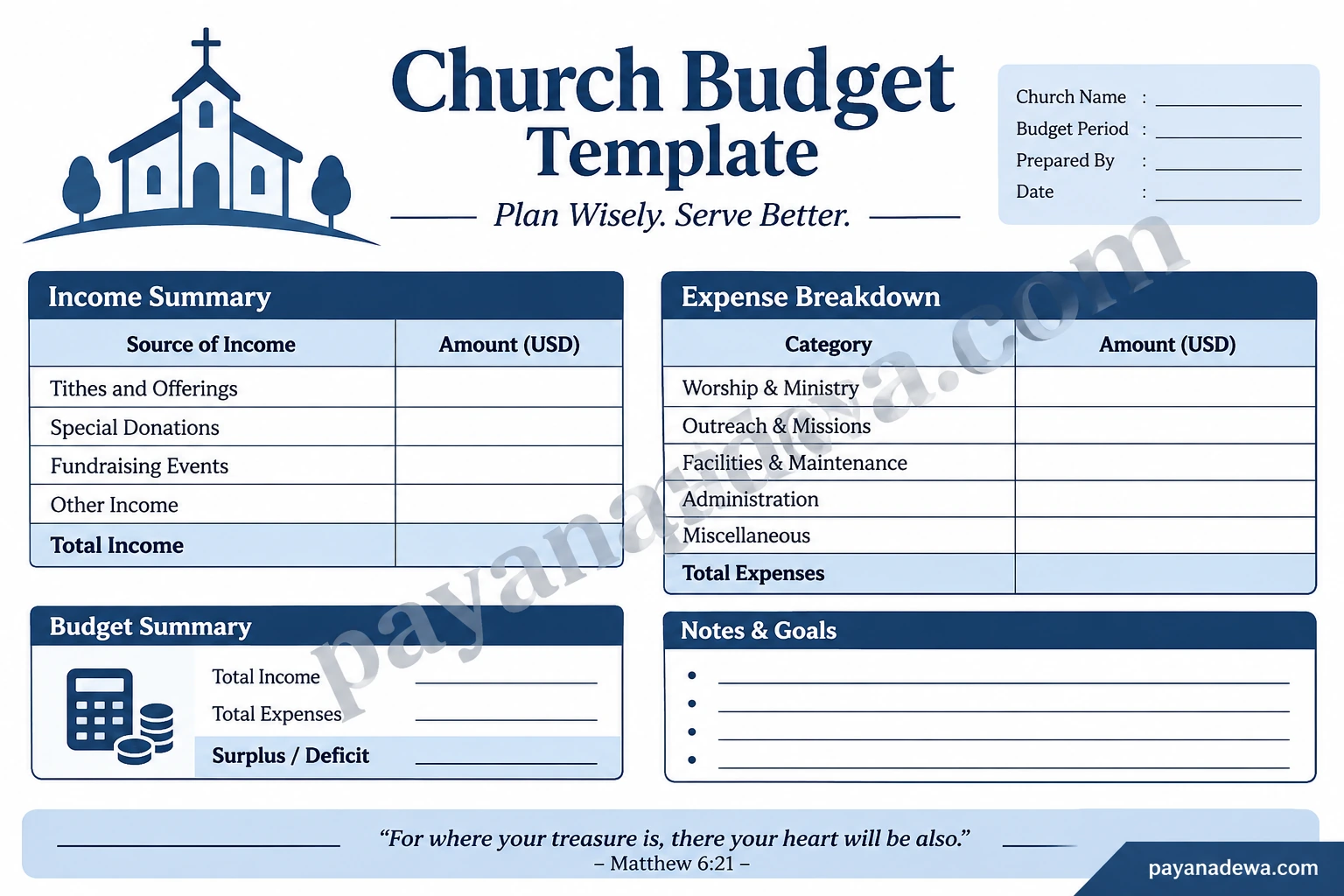
A printable church budget template provides a simple way to organize financial information without creating a spreadsheet from scratch. It is especially useful for smaller congregations, church treasurers, and ministry coordinators.
To use the template effectively, follow these steps:
- Enter church information: Write the church name, budget period, preparer’s name, and preparation date.
- Record income: Add estimated amounts for tithes, offerings, special donations, and fundraising activities.
- List expenses: Enter planned spending for worship, outreach, facilities, administration, and other activities.
- Calculate totals: Add all income and expenses to determine the projected financial position.
- Write financial goals: Use the notes section to record important priorities, upcoming projects, and financial reminders.
- Review regularly: Update the figures as actual financial information becomes available.
For more detailed financial tracking, churches can transfer the information into a spreadsheet or accounting system. This makes it easier to compare planned amounts with actual transactions.
Practical Tips for Better Church Financial Management
A useful budget should be realistic, flexible, and easy to understand. These practical tips can help improve financial management throughout the year.
Involve Ministry Leaders
Ask department leaders to participate in the budgeting process. They understand their program requirements and can provide more accurate expense estimates.
Keep Financial Records Organized
Maintain receipts, invoices, donation records, bank statements, and financial reports. Proper documentation makes financial reviews easier and supports accountability.
Separate Restricted Donations
Some contributions are intended for specific purposes. Track these funds separately and use them according to donor restrictions and applicable rules.
Review Financial Reports Monthly
Monthly reviews help identify unexpected expenses, declining donations, and budget differences. They also provide opportunities to correct problems before they become serious.
Establish Clear Financial Procedures
Use appropriate approval processes, separation of financial responsibilities, bank reconciliations, and regular oversight. These safeguards help protect church resources and reduce the risk of errors or misuse.
Plan for Long-Term Needs
Think beyond immediate expenses. Consider future building maintenance, technology upgrades, ministry expansion, and emergency reserves when preparing financial plans.
Common Church Budgeting Mistakes to Avoid
Even experienced church leaders can make budgeting mistakes. Fortunately, many of these problems can be prevented through careful planning and regular communication.
- Overestimating donations: Use historical information and realistic assumptions instead of relying on optimistic projections.
- Ignoring small expenses: Minor purchases can add up over time, so include recurring costs in the budget.
- Forgetting maintenance: Plan for regular repairs instead of waiting until problems become expensive.
- Failing to monitor spending: Review actual transactions regularly rather than checking the budget only at the end of the year.
- Not involving departments: Consult ministry leaders to understand their financial needs.
- Skipping financial reviews: Schedule periodic reviews to maintain transparency and accountability.
Conclusion
A well-planned church budget is an essential tool for responsible financial stewardship. It helps churches organize income, manage expenses, support ministry activities, and prepare for future needs.
By reviewing financial records, estimating income carefully, setting clear priorities, and monitoring expenses regularly, church leaders can build a more sustainable financial plan.
Whether you manage a small congregation or a growing church, a practical church budget template can simplify the process. Start with a clear financial overview, involve the appropriate ministry leaders, and review your budget consistently throughout the year.
With thoughtful planning and transparent financial practices, your church can use its resources wisely and continue supporting its mission and community.