Christmas Day is one of the most widely celebrated holidays in the world. Observed every year on December 25, this special occasion brings families, friends, and communities together to share happiness, exchange gifts, enjoy festive meals, and create lasting memories. For Christians, Christmas celebrates the birth of Jesus Christ. For many others, it is also a time to express love, practice kindness, and appreciate the people who make life meaningful.
From beautifully decorated Christmas trees to sparkling lights and thoughtful presents, Christmas Day has a unique atmosphere that makes the season memorable. Although traditions vary between countries and cultures, the holiday often shares common themes of generosity, togetherness, gratitude, and hope.
Whether you are planning your first Christmas celebration, exploring the history of the holiday, or looking for creative ways to make December 25 more meaningful, this guide covers everything you need to know about Christmas Day.
What Is Christmas Day?
Christmas Day is an annual holiday celebrated on December 25 by many Christians around the world. It commemorates the birth of Jesus Christ, whom Christians recognize as the Son of God and the central figure of their faith.
Over the centuries, Christmas has developed into a celebration that combines religious observances with cultural traditions. Churches hold special services, families prepare festive meals, and people decorate their homes with seasonal ornaments.
In many countries, Christmas Day is also a public holiday. Businesses, schools, and government offices may close so people can spend time with loved ones. However, the way Christmas is celebrated depends on local customs, religious beliefs, and family preferences.
Why Is Christmas Day Celebrated on December 25?
The Bible does not specify the exact date of Jesus Christ’s birth. December 25 became associated with the celebration of Christmas during the fourth century in the Western Christian tradition. Historians have proposed several explanations for this date, including its relationship to existing Roman winter celebrations and early Christian calculations concerning the date of Jesus’ conception.
Today, December 25 is widely recognized as Christmas Day, although some Eastern Orthodox churches celebrate Christmas on January 7 in the Gregorian calendar because they follow the Julian calendar for certain religious dates.
The History and Origins of Christmas Day
The history of Christmas reflects the development of Christian worship and the influence of different cultural traditions. Early Christians placed particular emphasis on the death and resurrection of Jesus. Over time, the celebration of his birth became an important part of the Christian calendar.
By the fourth century, December 25 was established as a Christmas celebration in Rome. As Christianity spread throughout Europe and beyond, Christmas customs evolved to reflect local languages, foods, music, and seasonal practices.
During the Middle Ages, Christmas celebrations often included church services, feasting, music, and community gatherings. Later, traditions such as decorated Christmas trees, greeting cards, and modern gift-giving became increasingly popular in different parts of the world.
In the nineteenth century, Christmas developed many of the familiar customs associated with the holiday today. Family-centered celebrations, festive decorations, charitable giving, and popular Christmas stories helped shape its modern image.
Popular Christmas Day Traditions Around the World
Christmas traditions differ widely, making the holiday an interesting blend of religious observance and cultural expression. Some families prefer quiet celebrations at home, while others attend large gatherings or participate in community events.
Decorating Christmas Trees
A decorated Christmas tree is one of the most recognizable symbols of the holiday. Families often place a tree in their living rooms and decorate it with ornaments, ribbons, lights, and a star or angel at the top.
Some people choose natural evergreen trees, while others use artificial trees that can be stored and reused. Decorating the tree together can become a cherished family activity, especially when each ornament has a personal story.
Exchanging Christmas Gifts
Gift-giving is a popular Christmas tradition that allows people to express appreciation and affection. Presents do not need to be expensive to be meaningful. A handwritten card, homemade treat, or carefully chosen item can communicate genuine thoughtfulness.
To make gift-giving more enjoyable, consider these practical ideas:
- Set a realistic budget before shopping for Christmas presents.
- Choose gifts based on the recipient’s interests and needs.
- Consider handmade gifts for a personal touch.
- Use reusable gift bags or recyclable wrapping paper when possible.
- Give your time through shared activities or acts of service.
Sharing a Festive Christmas Meal
Food plays an important role in many Christmas celebrations. Depending on the country and family tradition, a Christmas meal may include roasted meat, vegetables, rice dishes, seafood, cakes, cookies, or other festive specialties.
In some households, preparing the meal together is just as meaningful as eating it. Family members may share recipes passed down through generations or introduce new dishes each year.
If you are hosting Christmas dinner, plan the menu in advance. Ask guests about dietary requirements, prepare dishes that can be made ahead of time, and keep the menu manageable. This helps everyone enjoy the occasion without placing too much pressure on the host.
Attending Church Services
For many Christians, attending a Christmas Eve or Christmas Day church service is an essential tradition. These services may include Bible readings, hymns, prayers, and reflections on the birth of Jesus Christ.
Church gatherings also provide opportunities for communities to support people who may be experiencing loneliness, financial hardship, or other difficulties during the holiday season.
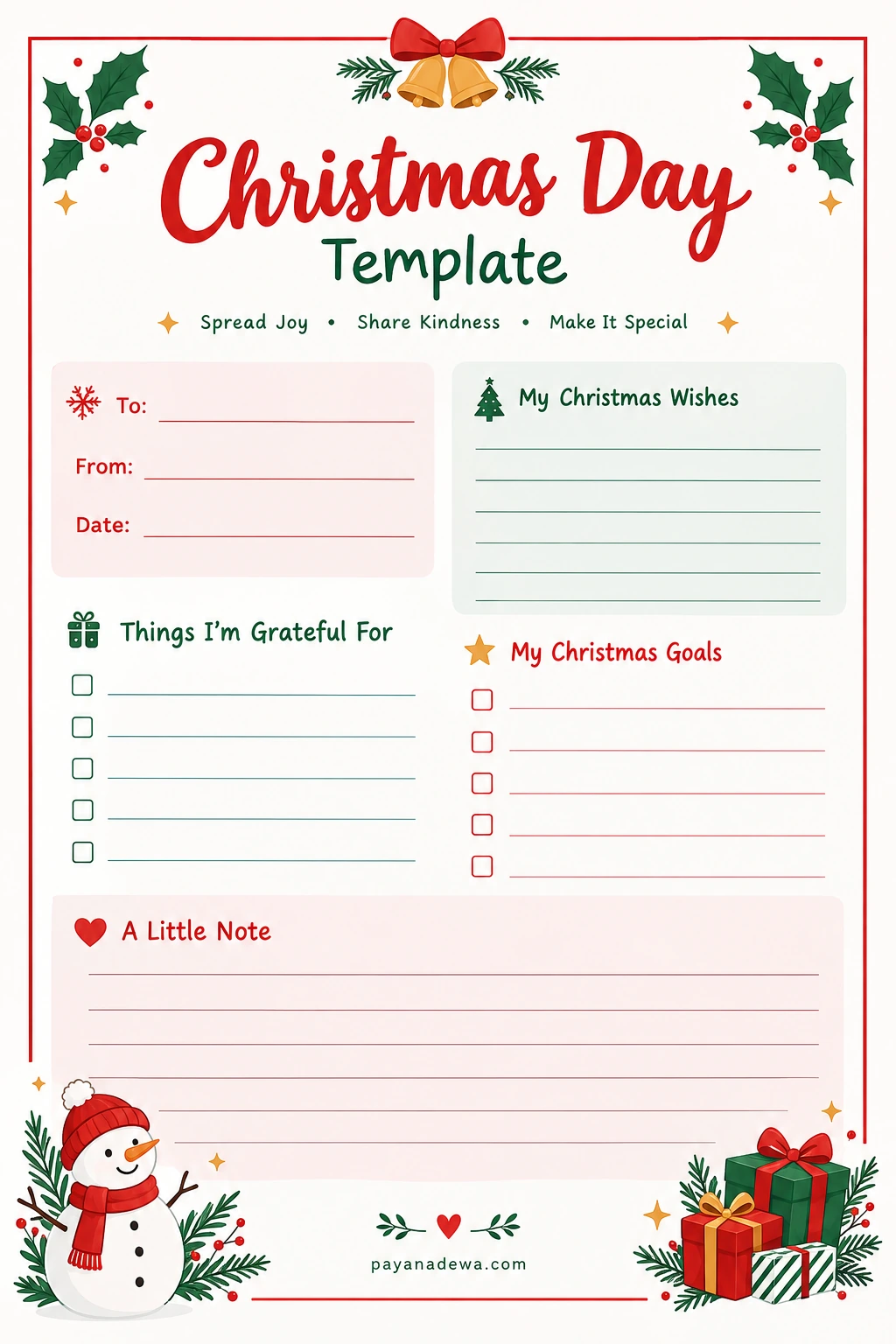
Make your Christmas celebration more organized and personal with a printable Christmas Day template. You can use a festive worksheet to write holiday wishes, record things you are grateful for, plan meaningful activities, or prepare a thoughtful message for someone special. A printable template is also a simple activity for children, families, and anyone who enjoys creative holiday planning.
How to Celebrate Christmas Day at Home
You do not need an expensive party or an elaborate schedule to enjoy Christmas Day. Simple activities can create a warm and memorable celebration. The best plan is one that reflects your family’s interests, traditions, and available time.
Create a Cozy Christmas Atmosphere
Start by decorating the areas where you plan to spend the most time. Add a few festive ornaments, arrange comfortable seating, and play your favorite Christmas music. String lights and handmade decorations can create a welcoming atmosphere without requiring a large budget.
Plan Activities for the Whole Family
Choose activities that allow everyone to participate. Younger children might enjoy coloring pages or decorating cookies, while adults may prefer cooking together, watching a holiday movie, or sharing stories from previous Christmas celebrations.
Here are some easy Christmas Day activities to consider:
- Decorate cookies or prepare a favorite family recipe.
- Watch a Christmas movie together.
- Exchange handwritten cards and thoughtful gifts.
- Create a gratitude list and share positive memories.
- Play board games or organize a friendly holiday quiz.
- Call relatives or friends who cannot attend in person.
- Donate useful items or prepare a meal for someone in need.
Make Time for Rest and Connection
Christmas can become busy when people try to organize too many activities. Leave some time for relaxation and conversation. Put away distractions during meals, listen carefully to one another, and avoid expecting every moment to be perfect.
A relaxed celebration often creates better memories than an expensive event filled with unnecessary pressure.
Christmas Day Traditions in Different Countries
Christmas is celebrated in many parts of the world, but local traditions make each celebration distinctive. Climate, religion, family customs, and regional foods all influence how people observe the holiday.
Christmas in the United States
In the United States, common traditions include decorating Christmas trees, hanging stockings, exchanging gifts, and preparing special family meals. Many neighborhoods display festive lights, while children often look forward to stories about Santa Claus.
Christmas in the United Kingdom
In the United Kingdom, Christmas traditions may include exchanging cards, enjoying Christmas crackers, decorating homes, and serving a festive dinner. Roast turkey, vegetables, potatoes, and Christmas pudding are popular choices in many households, although menus vary.
Christmas in the Philippines
The Philippines is known for an especially long Christmas season. Celebrations often begin months before December, with colorful decorations, Christmas music, and community gatherings. Many families attend religious services and share festive meals with relatives and friends.
Christmas in Indonesia
In Indonesia, Christmas is celebrated by Christian communities across the archipelago. Traditions vary by region and family, but may include church services, family gatherings, festive meals, and home decorations. Some communities incorporate local music, clothing, foods, and cultural customs into their celebrations.
Because Indonesia has a rich diversity of cultures, Christmas celebrations can look different from one island or community to another. The shared emphasis on faith, family, hospitality, and generosity remains important for many celebrants.
Meaningful Ways to Make Christmas Day Special
Christmas can be an opportunity to focus on more than decorations and presents. Small acts of kindness often make the holiday more meaningful for both the giver and the recipient.
Practice Gratitude
Take a few minutes to reflect on the positive things in your life. You might write down the people who supported you, experiences that helped you grow, or simple moments that brought happiness during the year.
A printable Christmas gratitude worksheet can make this activity easier. Write down a few things you appreciate and invite family members to share their own reflections.
Help People in Your Community
Consider supporting a local charity, donating essential supplies, visiting someone who may feel isolated, or helping a neighbor with a practical task. Choose an activity that fits your resources and respects the needs of the people receiving help.
Reduce Waste During the Holidays
Thoughtful planning can make Christmas more environmentally friendly. Reuse decorations, avoid buying unnecessary gifts, choose durable products, and plan meals carefully to reduce food waste.
You can also use reusable gift bags and recycle packaging where local facilities allow it. Small changes can help you celebrate responsibly without losing the joy of the season.
Practical Tips for Planning Christmas Day
A little preparation can make December 25 less stressful. Use the following checklist to organize your celebration and focus on what matters most.
- Set a budget: Decide how much you can comfortably spend on food, decorations, gifts, and activities.
- Prepare a schedule: List important activities, such as church services, meal preparation, and family visits.
- Plan your menu: Choose recipes early and purchase ingredients before the busiest shopping days.
- Organize gifts: Make a list of recipients and track the gifts you have already purchased or prepared.
- Include everyone: Consider children’s activities, older relatives’ comfort, and guests’ dietary needs.
- Keep expectations realistic: Focus on meaningful experiences rather than trying to create a perfect celebration.
- Prepare a backup plan: Have an alternative activity or meal option in case your original plans change.
Remember that Christmas Day does not need to follow a strict formula. You can adapt traditions, simplify your schedule, and create new rituals that suit your household.
Frequently Asked Questions About Christmas Day
When Is Christmas Day Celebrated?
Christmas Day is celebrated on December 25 each year by many Christian communities and people who observe the holiday culturally. Some Eastern Orthodox churches celebrate Christmas on January 7 in the Gregorian calendar because of differences in calendar use.
Why Is Christmas Day Important?
For Christians, Christmas Day commemorates the birth of Jesus Christ. More broadly, many people associate the holiday with family, generosity, gratitude, peace, and community connection.
What Are the Most Popular Christmas Day Activities?
Popular activities include decorating a Christmas tree, exchanging gifts, preparing festive meals, attending church services, watching Christmas movies, singing holiday songs, and spending time with loved ones.
How Can I Celebrate Christmas Day on a Budget?
You can celebrate affordably by making homemade decorations, preparing a shared meal, exchanging inexpensive or handmade gifts, enjoying free activities, and spending time with family and friends. Meaningful traditions do not need to be expensive.
How Can I Make Christmas Day More Meaningful?
Focus on gratitude, kindness, and personal connections. Write thoughtful messages, help someone in need, preserve family traditions, or create a new ritual that everyone can enjoy.
Conclusion
Christmas Day is a special occasion that brings together history, faith, culture, and family traditions. Although celebrations differ around the world, the holiday often encourages people to share kindness, express gratitude, and strengthen their connections with others.
From decorating a Christmas tree and preparing a festive meal to helping your community and creating a printable holiday activity, there are many ways to make December 25 memorable. The most meaningful celebration is not necessarily the biggest or most expensive. It is the one that reflects your values and gives you time to appreciate the people around you.
As Christmas Day approaches, take a moment to plan a celebration that feels right for you. Embrace your favorite traditions, try something new, and remember that even a small act of kindness can make the holiday brighter.