Buying or selling an aircraft is a major transaction that requires accurate documentation. An Aircraft / Airplane Bill of Sale provides a written record of the transfer between the seller and buyer and can help both parties document important details about the aircraft, purchase price, and transaction terms. Whether you are transferring a private airplane, business aircraft, or another eligible aircraft, having a clear bill of sale can make the process more organized and easier to document.
A well-prepared aircraft bill of sale should identify the parties involved, describe the aircraft accurately, state the agreed sale price, and provide space for signatures and dates. Depending on the aircraft and jurisdiction, additional registration, title, tax, or aviation authority requirements may also apply. For that reason, an airplane bill of sale should be treated as an important part of the overall aircraft transfer documentation rather than as a substitute for every other required document.
What Is an Aircraft / Airplane Bill of Sale?
An Aircraft / Airplane Bill of Sale is a written document used to record the sale and transfer of an aircraft from one party to another. It generally identifies the seller and buyer, provides information about the aircraft, records the purchase price, and establishes the date of the transaction.
The document can serve as evidence that the parties entered into a particular aircraft sale. It may also be useful when organizing ownership records, completing registration procedures, maintaining transaction files, or demonstrating the terms agreed upon by the parties.
Because aviation transactions can involve detailed ownership and registration requirements, the information included in an airplane bill of sale should match the aircraft’s official records whenever applicable.
Why Is an Airplane Bill of Sale Important?
An aircraft transaction typically involves more information than an ordinary personal-property sale. Aircraft may have registration numbers, serial numbers, engine information, maintenance records, liens, and other documentation that should be carefully reviewed.
A properly completed bill of sale helps create a clear transaction record. It can also reduce confusion by putting essential information in one document that both parties can review and sign.
Key Benefits of an Aircraft Bill of Sale
- Documents the transaction: Records that the aircraft was sold between the identified parties.
- Identifies the aircraft: Provides important information such as make, model, year, and serial number.
- Records the purchase price: Establishes the agreed financial consideration for the transaction.
- Clarifies the parties: Identifies the buyer and seller and their relevant contact information.
- Supports record keeping: Creates a useful document for maintaining an organized aircraft transaction file.
- Provides signature evidence: Gives both parties a place to confirm the transaction details.
These benefits make a printable aircraft bill of sale useful for individuals, aircraft owners, brokers, and businesses involved in aircraft transactions.
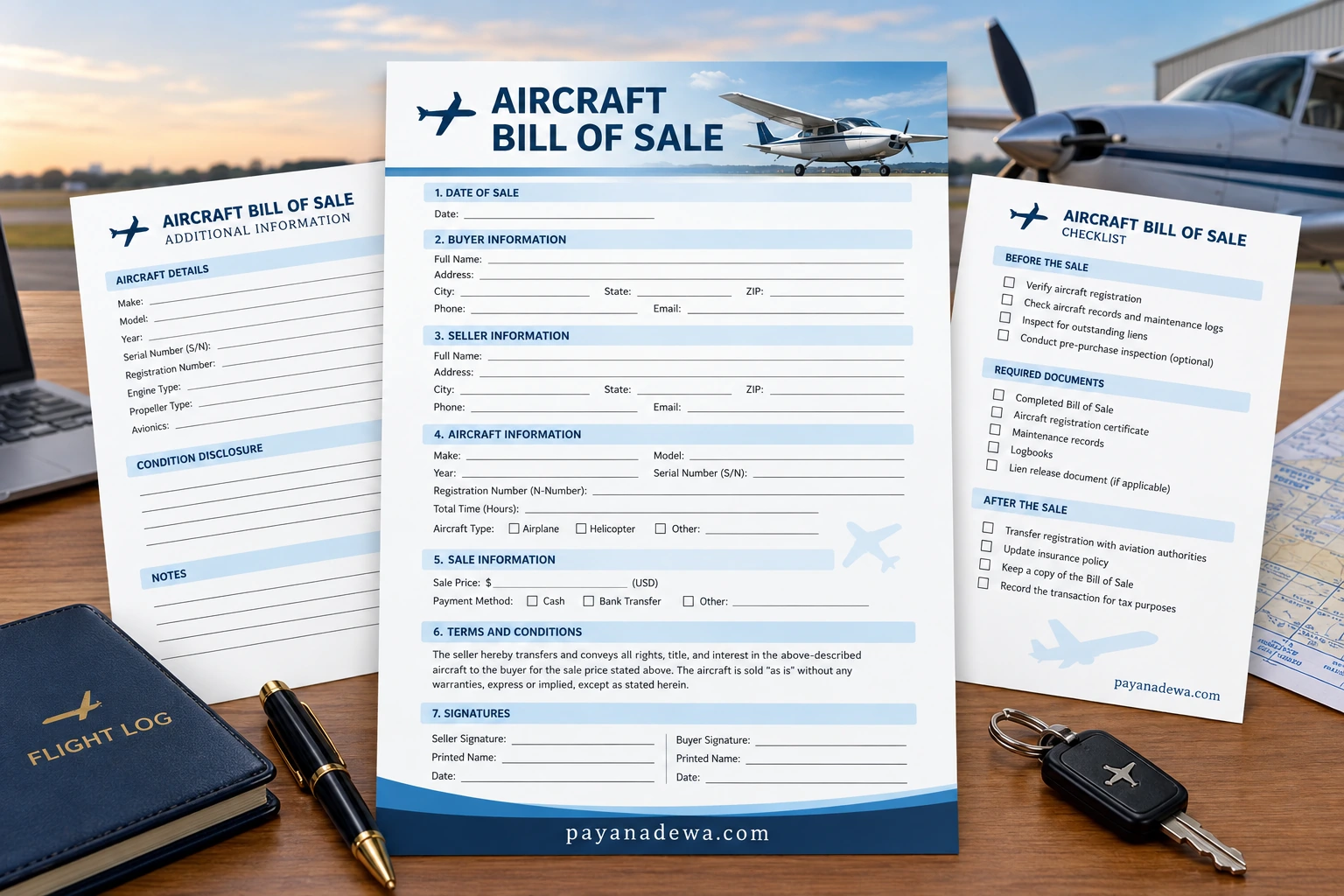
What Information Should an Aircraft Bill of Sale Include?
A good aircraft bill of sale should contain enough information to clearly identify the transaction and the aircraft being transferred. The exact requirements can vary depending on the jurisdiction and aviation authority involved, so users should verify applicable requirements before relying on a template for an official transfer.
1. Seller Information
The document should identify the seller clearly. This may include the seller’s full legal name, address, telephone number, email address, and other information needed to identify the transferring party.
2. Buyer Information
The buyer’s information should also be recorded accurately. Include the buyer’s full legal name and relevant contact information. If the buyer is a company or organization, use the appropriate legal entity name rather than an informal business name.
3. Aircraft Information
The aircraft description is one of the most important sections of an airplane bill of sale. Depending on the transaction, useful information may include:
- Aircraft manufacturer or make
- Aircraft model
- Manufacturing year
- Aircraft serial number
- Registration number
- Engine information
- Airframe information
- Total time or other relevant aircraft details
- Aircraft type
Always compare the information entered on the bill of sale with the aircraft’s existing records. A simple spelling error or incorrect identification number can create unnecessary administrative problems.
4. Purchase Price and Payment Information
The aircraft bill of sale should state the agreed purchase price. The parties may also document the payment method and other financial terms when appropriate. If the transaction involves deposits, installments, financing, or other arrangements, additional agreements may be necessary.
5. Date of Sale
The effective date of the transaction should be clearly stated. The parties should make sure the date is consistent with the other transaction documents and applicable registration requirements.
6. Terms and Conditions
The bill of sale can include appropriate terms describing the transaction. For example, the parties may document whether the aircraft is sold in its current condition, subject to specific disclosures, or accompanied by particular documents or equipment.
7. Signatures
Both the seller and buyer should have clearly identified signature sections. Include printed names and dates where appropriate. Additional signatures or notarization may be required in certain circumstances, depending on applicable rules.
How to Complete an Aircraft Bill of Sale
Completing an aircraft bill of sale carefully is important because the document becomes part of the transaction record. Before signing, both parties should review every section and confirm that the information is accurate.
Step 1: Identify the Buyer and Seller
Enter the complete legal names and relevant contact information for both parties. If a representative signs for an organization, confirm that the representative has appropriate authority to sign.
Step 2: Verify the Aircraft Details
Use reliable aircraft records to enter the make, model, serial number, registration number, and other required information. Do not rely solely on memory or informal notes.
Step 3: Enter the Sale Details
Record the purchase price, date of sale, and applicable payment information. Make sure the information matches the parties’ other transaction documents.
Step 4: Review the Terms
Read all terms and conditions carefully before signing. If the aircraft is subject to special arrangements, disclosures, liens, financing, or other circumstances, obtain appropriate professional guidance before finalizing the transaction.
Step 5: Sign and Retain Copies
Both parties should sign the completed document and retain a copy for their records. Additional copies may be needed for registration or other administrative purposes.
Aircraft Bill of Sale vs. Aircraft Registration
An important distinction is that an aircraft bill of sale and an aircraft registration document generally serve different purposes. The bill of sale records the transaction between the parties, while registration documents relate to the aircraft’s registration with the applicable aviation authority.
Completing a bill of sale does not automatically mean that every ownership, registration, tax, or title requirement has been completed. Buyers should determine what additional documents must be submitted after purchasing an aircraft.
Tips for Using an Aircraft Bill of Sale Template
A printable airplane bill of sale template can save time by providing a structured format for collecting transaction information. However, a template should be customized carefully for the specific transaction.
- Use accurate legal names. Avoid nicknames or informal names in important transaction fields.
- Double-check identification numbers. Compare serial and registration numbers with official aircraft records.
- Keep supporting documents. Store the bill of sale with relevant aircraft and transaction records.
- Review applicable requirements. Aviation documentation rules can vary by jurisdiction.
- Do not leave important fields unclear. If a section does not apply, indicate that appropriately rather than creating ambiguity.
- Keep signed copies. Both parties should retain a completed copy for their records.
- Seek professional advice when necessary. Complex transactions may require assistance from an aviation attorney, title professional, broker, or other qualified specialist.
Common Mistakes to Avoid
Even a simple document can create problems when important information is incomplete or inconsistent. Taking a few minutes to review the document before signing can help prevent avoidable errors.
Incorrect Aircraft Identification
One of the most important mistakes to avoid is entering an incorrect serial number or registration number. Always verify these details against reliable aircraft documentation.
Incomplete Buyer or Seller Information
Missing legal names or unclear contact information can make the transaction record less useful. Enter complete information whenever the form requires it.
Unclear Purchase Price
The agreed consideration should be stated clearly. If the transaction includes unusual payment arrangements, the parties should ensure that those arrangements are properly documented in the appropriate agreements.
Forgetting Additional Documentation
An aircraft bill of sale is only one part of many aircraft transactions. Registration documents, maintenance records, title documents, lien releases, tax forms, and other paperwork may also be relevant depending on the circumstances.
When Should You Use an Aircraft Bill of Sale?
An airplane bill of sale can be useful whenever ownership of an aircraft is transferred through a sale. It may be used for transactions involving privately owned aircraft, aircraft purchased for business purposes, or other eligible aviation transactions.
The document is particularly helpful when the buyer and seller want a clear written record of the aircraft, transaction date, purchase price, and parties involved.
How to Keep Your Aircraft Sale Records Organized
After completing an aircraft transaction, keep the signed bill of sale together with other important records. A digital backup can also be useful, provided that it is stored securely.
A practical aircraft transaction folder may include the signed bill of sale, aircraft registration records, purchase agreement, maintenance documentation, inspection records, lien-related documents, payment records, and correspondence related to the transaction.
Organizing these documents immediately after the sale can make future administrative tasks easier and reduce the risk of losing important paperwork.
Final Thoughts on the Aircraft / Airplane Bill of Sale
An Aircraft / Airplane Bill of Sale provides a practical way to document an aircraft transaction and organize important information about the buyer, seller, aircraft, purchase price, and sale date. A carefully completed document can make the transaction record clearer and provide both parties with a useful reference for their records.
For the best results, verify every aircraft identification detail, use the parties’ correct legal information, review the purchase terms carefully, and retain signed copies. Because aviation documentation requirements can differ by jurisdiction and transaction type, users should also confirm whether additional forms or filings are required by the relevant aviation authority or other professionals.
Using a clean printable Aircraft / Airplane Bill of Sale Template can provide a convenient starting point for organizing the information needed during an aircraft sale. With accurate details and proper supporting documentation, the template can help make the paperwork process more structured, understandable, and efficient.