Understanding your height and weight is an important part of maintaining good health. These two basic measurements can provide useful information about physical development, body composition, and overall wellness. Whether you want to monitor your fitness progress, follow your child’s growth, or maintain a healthy lifestyle, keeping track of your height and weight can help you make better decisions.
However, height and weight are more than just numbers on a scale. Their meaning depends on several factors, including age, sex, genetics, activity level, and overall health. Therefore, it is important to understand how these measurements work and how to interpret them correctly.
In this guide, you will learn how to measure your height and weight accurately, understand the relationship between them, use BMI as a general screening tool, and track your measurements over time.
What Are Height and Weight?
Height and weight are two basic physical measurements commonly used to assess growth and general health. Although they are often discussed together, each measurement provides different information about the body.
Understanding Height
Height refers to how tall a person is when standing upright. It is commonly measured in centimeters (cm), meters (m), or feet and inches.
Height is influenced by several factors, such as:
- Genetics: Family characteristics play a major role in determining adult height.
- Nutrition: Proper nutrition supports normal growth and development.
- Age: Height generally increases during childhood and adolescence.
- Hormones: Growth hormones influence bone development.
- Health conditions: Certain medical conditions can affect physical growth.
Most people reach their adult height after puberty. However, height can vary significantly between individuals, even among people of the same age.
Understanding Weight
Weight measures how heavy a person is. It is usually recorded in kilograms (kg) or pounds (lbs).
Body weight includes several components, including:
- Muscle mass
- Body fat
- Bones
- Water
- Organs and other body tissues
Because weight includes all these components, a number on the scale cannot explain someone’s complete health condition. For example, two people with the same height and weight may have different muscle and body fat levels.
Why Is Tracking Height and Weight Important?
Regularly recording your measurements can help you understand changes in your body. It also provides useful information when discussing growth or health concerns with a healthcare professional.
1. Monitor Physical Growth
For children and teenagers, height and weight measurements help parents and healthcare professionals monitor physical development. Comparing measurements over time can reveal whether a child is following an expected growth pattern.
2. Support Fitness Goals
If you exercise regularly, tracking your measurements can help you understand your progress. For example, your weight may remain similar while your muscle mass increases and your body composition changes.
3. Maintain Healthy Habits
Keeping a measurement record can encourage healthier daily habits. It may also help you recognize patterns related to sleep, nutrition, physical activity, and lifestyle changes.
4. Provide Useful Health Information
Healthcare professionals often consider height and weight when assessing general health. These measurements can be used alongside medical history, physical examinations, and other health indicators.
How to Measure Your Height Correctly
Accurate height measurements require a flat surface and proper positioning. You can use a wall-mounted measuring tape or a professional stadiometer.
Follow these simple steps:
- Remove your shoes and bulky hair accessories.
- Stand on a flat, hard floor against a straight wall.
- Keep your feet together and your legs straight.
- Position your heels against the wall.
- Look straight ahead with your head level.
- Place a flat object, such as a book, horizontally on your head.
- Mark the point where the object meets the wall.
- Measure the distance from the floor to the mark.
For better consistency, measure your height at approximately the same time of day. Your height can vary slightly throughout the day because of natural changes in the spine.
How to Measure Your Weight Correctly
A reliable weighing routine helps you collect consistent measurements. Although body weight naturally changes throughout the day, following the same procedure makes comparisons more useful.
Use these practical tips:
- Place your weighing scale on a flat, hard surface.
- Check that the scale is properly calibrated.
- Weigh yourself at a consistent time, preferably in the morning.
- Use similar clothing or lightweight clothing.
- Stand still in the center of the scale.
- Record the displayed number.
- Avoid drawing conclusions from a single measurement.
Remember that hydration, meals, exercise, and other daily factors can temporarily affect your weight. Therefore, look at longer-term patterns instead of focusing on individual readings.
Understanding the Relationship Between Height and Weight
Height and weight are often considered together because body size can provide useful information about general health. However, there is no single ideal weight that applies to everyone.
A person’s healthy weight range depends on several factors, including age, sex, muscle mass, body composition, and medical history.
What Is Body Mass Index (BMI)?
Body Mass Index, commonly called BMI, is a screening measurement that compares weight with height. It is calculated by dividing weight in kilograms by height in meters squared.
BMI formula:
BMI = Weight (kg) ÷ Height (m)²
For example, if someone weighs 70 kg and has a height of 1.75 meters, the calculation is:
70 ÷ (1.75 × 1.75) = 22.86
For adults, commonly used BMI categories are:
- Below 18.5: Underweight
- 18.5 to 24.9: Healthy weight range
- 25.0 to 29.9: Overweight
- 30.0 or higher: Obesity range
These categories are general adult screening guidelines, not a diagnosis. BMI does not directly measure body fat or distinguish between muscle and fat. It may also require different interpretation for certain populations.
For children and teenagers, BMI must be interpreted using age- and sex-specific growth charts rather than standard adult categories.
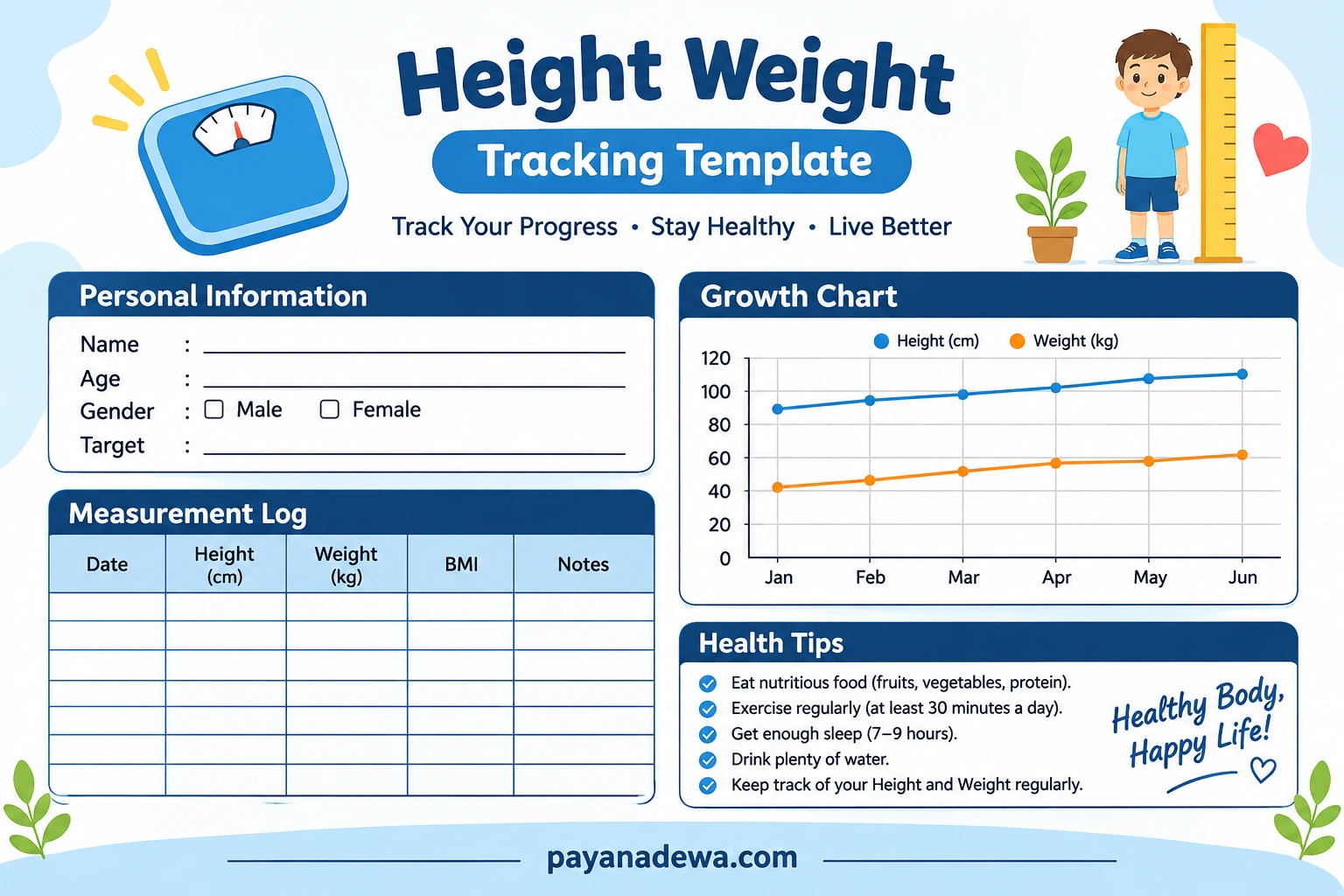
Height and Weight Tracking Template
A simple tracking template makes it easier to organize your measurements. Instead of relying on memory, you can record each result in one place and compare changes over time.
Use the following template to create a personal measurement record.
What Information Should You Record?
A useful height and weight tracker can include the following information:
- Name or identification label
- Age
- Date of measurement
- Height in centimeters
- Weight in kilograms
- BMI, if appropriate
- Additional notes or observations
For children, parents can use the record to organize measurements before routine healthcare appointments. For adults, it can support personal fitness and wellness monitoring.
Practical Tips for Maintaining a Healthy Weight
Maintaining a healthy weight is not about following extreme diets or exercising excessively. Instead, focus on realistic habits that support your overall well-being.
Eat a Balanced Diet
Choose a variety of nutritious foods, including vegetables, fruits, whole grains, protein sources, and healthy fats. A balanced eating pattern provides essential nutrients and supports normal body functions.
Stay Physically Active
Regular physical activity supports cardiovascular health, muscle strength, and general fitness. Choose activities you enjoy, such as walking, cycling, swimming, or dancing.
Get Enough Sleep
Sleep is an important part of physical recovery and overall health. Adults generally need seven to nine hours of sleep each night, although individual needs can vary.
Drink Enough Water
Proper hydration supports normal body functions. Your water needs may change depending on your activity level, climate, and individual health circumstances.
Avoid Extreme Weight Changes
Rapid weight loss or gain is not always healthy. Focus on sustainable habits rather than unrealistic targets. If you experience unexplained weight changes, consider speaking with a healthcare professional.
Common Mistakes When Tracking Height and Weight
Even simple measurements can become misleading when recorded incorrectly. Avoid these common mistakes to make your tracking routine more reliable.
- Using different measuring methods: Try to use the same equipment and procedure each time.
- Weighing at inconsistent times: Daily weight naturally fluctuates, so consistent timing improves comparisons.
- Ignoring body composition: Muscle and fat affect body weight differently.
- Comparing yourself with others: Every person has different physical characteristics and health needs.
- Focusing only on BMI: BMI is a screening tool, not a complete assessment of health.
- Measuring too frequently: Excessive checking can create unnecessary stress and confusion.
Frequently Asked Questions About Height and Weight
How often should I measure my height?
Adults generally do not need to measure their height frequently. An occasional measurement may be sufficient. Children and teenagers may need regular measurements during routine growth assessments.
How often should I check my weight?
This depends on your personal goals and health circumstances. Some people prefer weekly measurements, while others follow a schedule recommended by their healthcare professional.
Can two people have the same height but different healthy weights?
Yes. Muscle mass, body composition, age, sex, and other individual characteristics can influence body weight. Therefore, people with the same height may have different healthy weight ranges.
Does BMI tell me whether I am healthy?
No. BMI provides a general screening indication, but it cannot measure every aspect of health. Healthcare professionals may consider additional information, such as waist measurements, medical history, blood pressure, and laboratory results.
Can I use a height and weight chart for children?
Yes, but children’s measurements should be evaluated using appropriate age- and sex-specific growth charts. A standard adult height and weight chart is not suitable for assessing children’s growth.
Conclusion
Understanding your height and weight is a practical starting point for monitoring physical development and supporting a healthy lifestyle. Although these measurements provide useful information, they should always be considered alongside other factors, including age, body composition, nutrition, activity level, and overall health.
By measuring consistently, keeping an organized record, and developing healthy daily habits, you can better understand changes in your body over time. Use a height and weight tracking template to simplify the process and keep your measurements in one convenient place.
Most importantly, remember that health is not defined by a single number. Focus on long-term well-being, realistic goals, and habits that help you feel your best.