An effective event flyer is one of the simplest ways to promote an upcoming event and attract the right audience. Whether you are organizing a music festival, business conference, birthday party, charity fundraiser, or community gathering, a well-designed flyer can communicate important information and encourage people to attend.
Although digital marketing continues to grow, event flyers remain a valuable promotional tool. They can be shared on social media, distributed through email, printed for public spaces, or handed directly to potential attendees. With the right layout, colors, images, and messaging, a simple flyer can make your event stand out.
In this guide, you will discover what makes an effective event flyer, which essential details to include, how to choose the right design, and practical tips for creating a professional promotional flyer that gets attention.
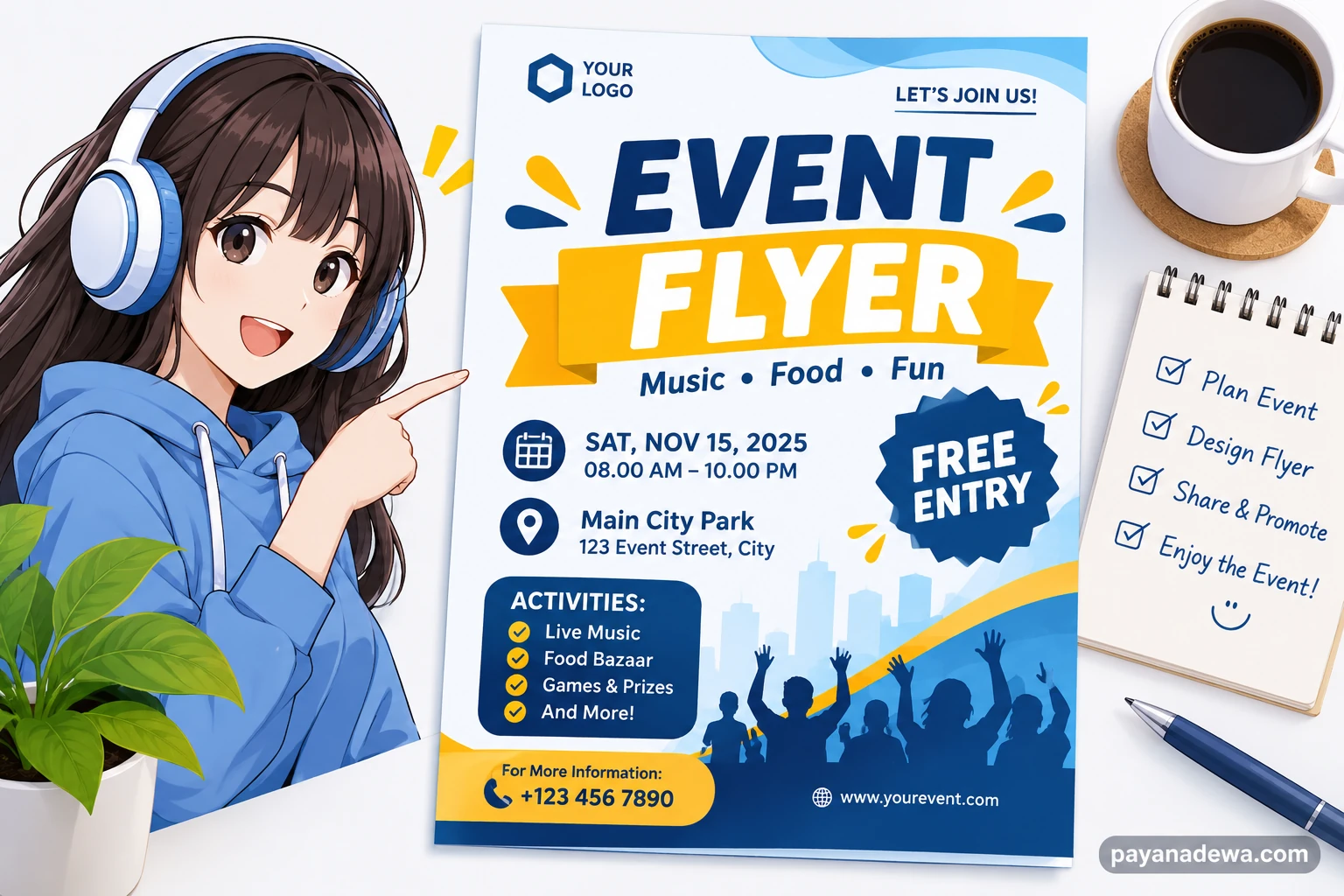
What Is an Event Flyer?
An event flyer is a promotional document designed to advertise an upcoming event. It provides essential information in a visually appealing format so potential attendees can quickly understand what the event is about and decide whether they want to participate.
Event flyers are commonly used by businesses, schools, nonprofit organizations, event planners, musicians, and local communities. They can promote both small private gatherings and large public events.
Unlike lengthy advertisements, a flyer focuses on clear communication. It combines an attractive headline, relevant visuals, event details, and a call to action in one convenient design.
Why Is an Event Flyer Important?
A professionally designed flyer can make a significant difference in your event promotion strategy. It helps establish the event’s identity while making important information easy to find.
1. Creates a Strong First Impression
Your flyer is often one of the first things people see about your event. An attractive design can generate curiosity and encourage potential attendees to learn more. Consistent colors, readable fonts, and relevant images also make your promotion look more professional.
2. Communicates Important Information
People need clear details before deciding to attend an event. A well-organized flyer presents the date, time, venue, admission information, and contact details without overwhelming the reader.
3. Supports Online and Offline Promotion
One major advantage of an event flyer is its flexibility. You can print copies for distribution or upload a digital version to different marketing channels.
- Share the flyer on Facebook, Instagram, and other social platforms.
- Send it through email newsletters and messaging applications.
- Print it for schools, offices, stores, and community notice boards.
- Add it to event websites and online community groups.
4. Builds Brand Recognition
Using your organization’s logo, brand colors, and consistent typography helps people recognize your business or organization. Over time, this consistency can make future event promotions more memorable.
Essential Elements of a Professional Event Flyer
A successful flyer does not need complicated graphics or excessive decoration. Instead, focus on the information your audience needs and present it in a logical order.
Attention-Grabbing Headline
The headline should immediately communicate the event’s main attraction. Use short, engaging wording that is easy to understand. For example, phrases such as “Summer Music Festival,” “Annual Business Conference,” or “Community Charity Fair” clearly explain the event.
Date and Time
Always display the event date and starting time prominently. If the event lasts several hours or multiple days, include the complete schedule. Make sure the information is accurate before publishing your flyer.
Location and Venue
Include the venue name and full address. For digital promotions, consider adding a QR code or a link to an online map. This makes it easier for attendees to find the location.
Event Description
Write a brief description explaining what visitors can expect. Highlight the main activities, speakers, performers, benefits, or special attractions. Keep the wording concise and focused on your audience.
Contact Information and Call to Action
Tell readers what they should do next. They might need to register, purchase tickets, contact an organizer, or visit a website. Use clear calls to action such as “Register Today,” “Get Your Tickets,” or “Join Us This Weekend.”
Popular Types of Event Flyer Designs
Different events require different visual styles. Choosing a design that matches the occasion makes your promotional material more relevant and appealing.
Music and Concert Event Flyers
Music flyers often feature bold typography, energetic colors, artist photographs, and creative backgrounds. They should highlight the performers, concert date, venue, and ticket information.
Business and Corporate Event Flyers
Corporate event flyers usually benefit from a clean and professional appearance. Simple layouts, balanced spacing, and brand colors work well for conferences, seminars, networking sessions, and product launches.
Birthday and Private Party Flyers
Party invitations can use playful fonts, colorful illustrations, and themed graphics. Include the celebration date, venue, RSVP details, and any special instructions for guests.
Community and Charity Event Flyers
Community event promotions should feel welcoming and informative. Use friendly visuals and clear messaging to explain the purpose of the event, its activities, and how people can participate.
How to Create an Event Flyer Step by Step
You do not need advanced graphic design experience to create an attractive promotional flyer. Following a simple process can help you produce a polished result.
Step 1: Define Your Target Audience
Start by identifying who you want to reach. A flyer for students may require a different design from one promoting a corporate conference. Understanding your audience helps you choose suitable colors, language, imagery, and communication channels.
Step 2: Choose the Right Flyer Size
Select a format based on how you plan to distribute the design. Common options include A4 and A5 for printed materials, while square and vertical layouts are useful for social media.
For printing, consider the required paper size, resolution, margins, and bleed settings. For digital publishing, use dimensions that suit the platform where your flyer will appear.
Step 3: Organize Your Content
Write down all the essential information before designing. Arrange the headline, event details, description, and contact information in order of importance. This makes the design process faster and reduces the chance of missing important details.
Step 4: Select Colors and Fonts
Choose a color palette that matches the event’s atmosphere and your brand identity. Use contrasting colors to make important information stand out.
For typography, select fonts that are easy to read. One font for the headline and another for the supporting text is often enough. Avoid using too many decorative typefaces.
Step 5: Add Relevant Images and Graphics
Images help communicate the event’s atmosphere. Choose photographs, illustrations, or icons that support your message. Make sure the visuals are high quality and do not compete with the main information.
Step 6: Review and Export Your Design
Before sharing your flyer, carefully check spelling, dates, addresses, phone numbers, and registration links. Then export the final design in an appropriate format. PDF is useful for printing, while PNG and JPG are commonly used for digital sharing.
Practical Tips for Making Your Event Flyer Stand Out
Even a simple design can be effective when the information is presented clearly. Apply these practical tips to improve your next promotional flyer.
- Keep the layout simple: Avoid unnecessary decorations and excessive text.
- Make the headline prominent: Readers should understand the event within seconds.
- Use visual hierarchy: Make the most important information larger or more noticeable.
- Choose readable typography: Ensure that text remains legible on both screens and printed paper.
- Use high-quality visuals: Blurry photographs and low-resolution graphics can make your design look unprofessional.
- Include a clear call to action: Tell readers exactly how to register or participate.
- Check mobile readability: Many people will first see your flyer on a smartphone.
- Maintain brand consistency: Use your organization’s logo and recognizable visual elements.
Free Event Flyer Templates: A Faster Way to Design
If you want to save time, starting with an event flyer template is a practical solution. A ready-made layout provides a useful structure that you can customize with your own information, colors, images, and branding.
Templates are particularly helpful for people who need professional-looking promotional materials without spending hours creating a design from scratch.
When choosing a template, look for the following features:
- A clean and organized layout.
- Clearly defined spaces for event information.
- Editable text, colors, and graphic elements.
- High-resolution output for printing.
- A design that matches your event category.
- Flexible formats for online and offline promotion.
Remember to replace all sample text and placeholder information before publishing. Also, check the template’s license to confirm that it allows your intended personal or commercial use.
Common Event Flyer Design Mistakes to Avoid
While creativity is important, certain design mistakes can reduce the effectiveness of your promotional material. Fortunately, most of them are easy to prevent.
- Too much information: Long descriptions make flyers difficult to scan. Focus on the details that matter most.
- Poor color contrast: Text should remain readable against its background.
- Unclear event details: Missing dates, incorrect addresses, or incomplete registration information can confuse potential attendees.
- Too many fonts: Excessive font variations create a messy appearance.
- Low-quality images: Use suitable, high-resolution graphics to maintain a professional finish.
- No call to action: Always provide a clear next step for interested readers.
Conclusion
A well-designed event flyer is an effective way to attract attention, communicate important details, and encourage people to participate. Whether you are promoting a concert, business conference, birthday celebration, or community gathering, the right combination of clear messaging and attractive design can make your promotion more successful.
Start by understanding your audience, organizing essential information, and selecting a suitable visual style. Then use readable typography, relevant images, and a strong call to action to complete your design.
If you want to create a professional promotional design more quickly, an editable event flyer template is an excellent starting point. Customize it to match your event, review every detail, and share it through the channels your audience uses most.