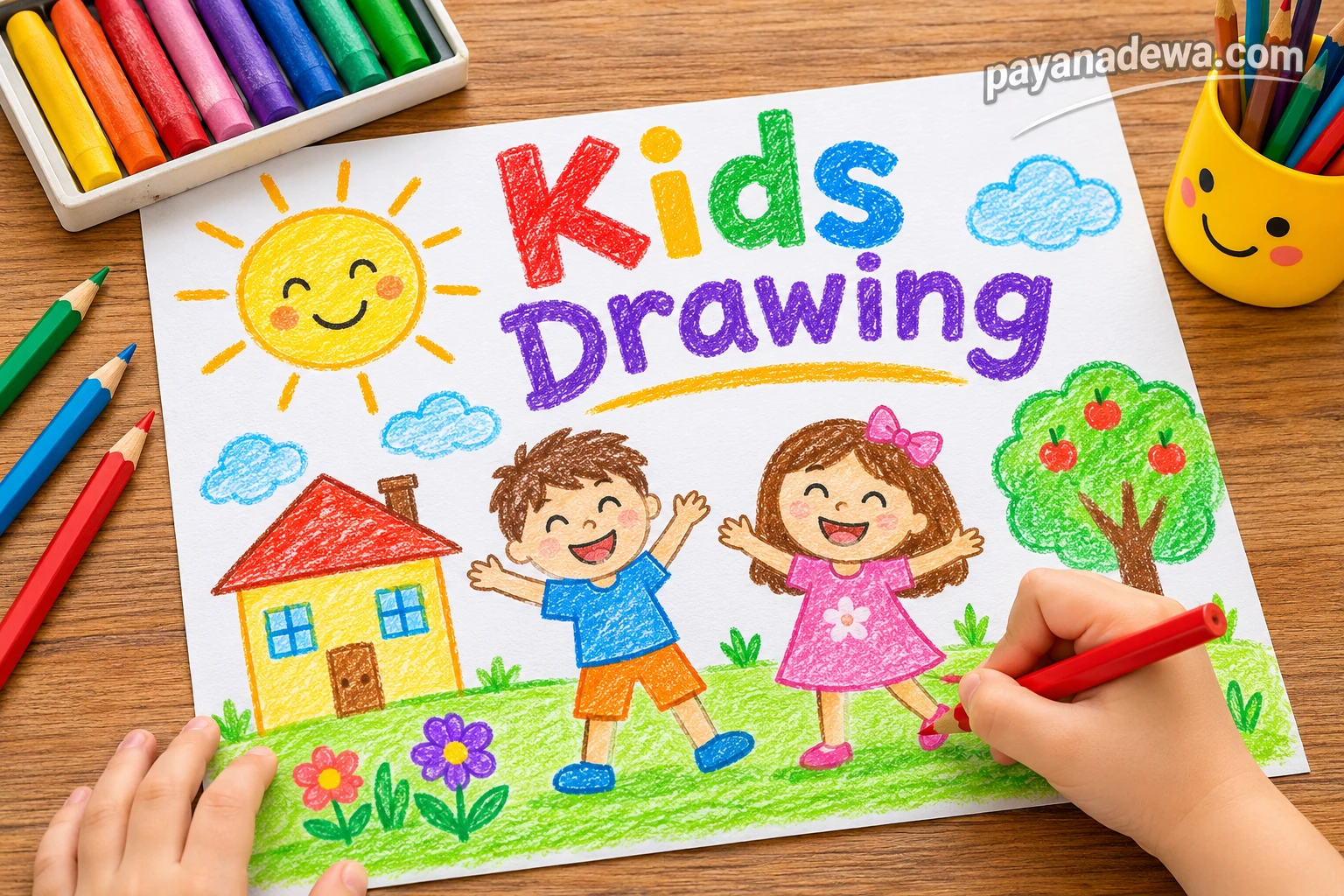
Kids drawing is one of the most enjoyable ways for children to explore their imagination, express emotions, and develop important creative skills. With just a piece of paper and a few crayons, children can turn simple ideas into colorful pictures. From drawing animals and flowers to creating imaginary worlds, every artwork offers an opportunity to learn something new.
Drawing is also an excellent activity for children of different ages and skill levels. Beginners can start with simple shapes, while older children can experiment with more detailed illustrations, patterns, and colorful scenes. Most importantly, kids do not need expensive art supplies or professional drawing lessons to enjoy the experience.
In this guide, you will discover fun kids drawing ideas, beginner-friendly activities, helpful drawing techniques, and practical ways to encourage creativity at home. Whether you are a parent, teacher, or caregiver, these suggestions can make art time more enjoyable and meaningful for every child.
Why Is Drawing Important for Kids?
Drawing is more than just a fun way to spend free time. It supports several areas of childhood development and gives children a comfortable way to explore their surroundings. As they draw, they make decisions about shapes, colors, sizes, and details.
1. Encourages Creativity and Imagination
Children often create pictures based on things they see, remember, or imagine. For example, a simple drawing of a house might become a magical castle with flying birds and rainbow-colored windows. This freedom allows children to explore original ideas without worrying about making mistakes.
2. Develops Fine Motor Skills
Holding crayons, controlling pencils, and coloring small areas help children practice hand movements. These activities gradually improve hand-eye coordination and fine motor control. As a result, drawing can also support skills needed for writing, cutting, and other everyday tasks.
3. Helps Children Express Their Feelings
Sometimes, children find it easier to communicate through pictures than through words. They may draw their family, favorite places, pets, or imaginary characters. Therefore, parents can use drawing time as a relaxed opportunity to understand what interests their children.
4. Builds Confidence and Patience
Completing a picture gives children a sense of achievement. They can look at their finished artwork and feel proud of their effort. In addition, practicing simple drawing techniques teaches patience and encourages them to keep trying when something feels difficult.
Easy Kids Drawing Ideas for Beginners
Starting with simple subjects makes drawing less intimidating. Children can learn basic shapes and gradually combine them to create recognizable objects. Here are some easy drawing ideas that work well for beginners.
1. Cute Animals
Animals are among the most popular subjects for children’s drawings. Their familiar shapes make them easy to recognize and fun to recreate.
- Cat: Start with a circle for the head, add two triangle ears, and draw simple eyes, a nose, and whiskers.
- Dog: Use a round face, floppy ears, and a curved tail to create a friendly puppy.
- Butterfly: Draw a narrow body and add two pairs of large, colorful wings.
- Fish: Create an oval body with a triangle-shaped tail and simple scales.
- Rabbit: Draw a small circle, two long ears, and a fluffy tail.
2. Flowers and Nature
Nature provides endless inspiration for young artists. Children can draw flowers, trees, leaves, mountains, clouds, and sunshine. They can also experiment with different colors to make their outdoor scenes unique.
A simple flower is a great starting point. Draw a small circle in the middle, add five or six petals, and finish with a green stem and leaves. Next, encourage children to create an entire garden filled with different flowers.
3. Houses and Landscapes
Drawing a house is a useful way to introduce basic geometric shapes. Children can combine squares, rectangles, and triangles to create buildings. Afterward, they can add doors, windows, trees, clouds, and a smiling sun.
For an extra challenge, ask them to draw their dream home or a colorful village. This activity combines creativity with basic observation skills.
4. Cartoon Characters
Simple cartoon characters are another exciting drawing activity. Children can create funny faces using circles, curved lines, and different expressions. They might draw happy monsters, friendly robots, imaginary superheroes, or cute fantasy creatures.
There is no need to make every character look realistic. In fact, unusual shapes and funny details often make children’s artwork more interesting.
Simple Drawing Activities for Different Age Groups
Every child develops drawing skills at a different pace. Therefore, choosing activities that match their interests and abilities can make creative time more enjoyable.
Drawing Activities for Toddlers (Ages 2–3)
At this stage, children usually enjoy exploring colors and making free marks on paper. Keep activities simple and focus on the experience rather than the finished picture.
- Make colorful scribbles using washable crayons.
- Draw large circles and simple lines.
- Explore finger painting with child-safe materials.
- Color large pictures with bold outlines.
Drawing Activities for Preschoolers (Ages 4–5)
Preschoolers often begin recognizing shapes and combining them into familiar objects. Give them opportunities to experiment while introducing simple drawing challenges.
- Draw a sun, house, tree, and flowers.
- Create simple animal pictures using circles and triangles.
- Connect dots to complete basic shapes.
- Draw a picture of their favorite family activity.
Drawing Activities for School-Age Children (Ages 6–10)
Older children may enjoy more detailed projects. They can practice proportions, patterns, shading, and storytelling through pictures.
- Create a comic strip with three or four scenes.
- Draw an imaginary animal or fantasy landscape.
- Practice drawing objects from observation.
- Design greeting cards for friends and family.
- Experiment with colored pencils and simple shading.
These age ranges are only general suggestions. Children can enjoy activities from different stages depending on their confidence, interests, and experience.
Essential Drawing Supplies for Kids
You do not need a professional art studio to create a fun drawing space. A small collection of safe, easy-to-use supplies is enough to get started.
- Plain paper: Choose drawing paper that is thick enough for crayons and colored pencils.
- Washable crayons: These are suitable for young children and make coloring easy.
- Colored pencils: Older children can use them for details, patterns, and shading.
- Washable markers: Bright markers help children create bold outlines and colorful illustrations.
- Erasers: A soft eraser can help children make small corrections.
- Drawing templates: Printable outlines provide a helpful starting point for beginners.
Always select age-appropriate supplies and supervise young children when using small accessories or materials that require special handling.
How to Help Kids Improve Their Drawing Skills
Children improve through regular practice, encouragement, and opportunities to explore different techniques. However, learning should remain enjoyable rather than becoming a stressful task.
Start with Basic Shapes
Show children how circles, squares, triangles, and rectangles can form everyday objects. For instance, a circle can become a face, while a triangle can become a roof. Once they understand these simple building blocks, they can create more complex pictures.
Use Step-by-Step Drawing Guides
Simple drawing tutorials can help children understand how to build an image one part at a time. Begin with a basic outline, add the main features, and finish with smaller details. Keep instructions short and allow children to make their own creative choices.
Encourage Daily Drawing Practice
Even ten or fifteen minutes of drawing can provide a valuable creative break. Set aside a regular time when children can explore their ideas without pressure. Over time, they may become more comfortable using different shapes, colors, and techniques.
Praise Effort Instead of Perfection
Every child’s artwork will look different, and that is part of the creative process. Instead of comparing pictures, celebrate the ideas and effort behind each drawing. Ask questions such as, “What is your favorite part of this picture?” or “Can you tell me the story behind it?”
Fun Ways to Make Drawing More Exciting
If children lose interest in traditional drawing activities, try introducing a little variety. Small changes can turn an ordinary art session into an exciting creative adventure.
- Drawing challenges: Choose a theme such as space, animals, or underwater life.
- Color challenges: Ask children to create a picture using only three colors.
- Story drawing: Read a short story and invite children to illustrate their favorite scene.
- Family art time: Let everyone draw the same subject in their own style.
- Printable worksheets: Use simple drawing templates for tracing, coloring, and creative practice.
- Art exhibitions: Display finished pictures on a wall or refrigerator to celebrate children’s efforts.
You can also combine drawing with other activities. For example, children can draw a picture after visiting a park, watching birds, or observing flowers in the garden. This helps connect creative expression with everyday experiences.
Tips for Parents and Teachers
Creating a supportive environment makes a big difference in how children approach art. Parents and teachers can help by providing simple materials, offering encouragement, and allowing enough freedom for experimentation.
- Keep drawing supplies in an accessible and organized place.
- Offer different subjects so children can discover their interests.
- Give children enough time to finish their artwork without rushing.
- Avoid correcting every unusual shape or color choice.
- Ask open-ended questions about their pictures.
- Introduce new techniques gradually and demonstrate them when helpful.
- Celebrate progress rather than comparing children’s abilities.
Most importantly, remember that the goal is not to create perfect artwork. The real value comes from exploration, enjoyment, and the confidence children gain as they express their ideas.
Conclusion: Make Every Drawing a Creative Adventure
Kids drawing is a simple yet meaningful activity that encourages imagination, supports motor development, and gives children a wonderful way to express themselves. From cute animals and colorful flowers to houses, cartoons, and fantasy worlds, there are countless subjects for young artists to explore.
With basic art supplies, easy drawing ideas, and positive encouragement, parents and teachers can make creative activities part of everyday life. Start with simple shapes, introduce fun challenges, and let children develop their own artistic styles at their own pace.
Remember, every picture tells a story. Whether it is a collection of colorful scribbles or a detailed landscape, each drawing represents a child’s imagination and growing confidence. Give them a blank page, a few colors, and the freedom to create something wonderful.