A black template can bring a clean, modern, and professional appearance to almost any printable project. Whether you are preparing a planner, worksheet, document, checklist, schedule, or creative layout, black provides a strong visual foundation that works well with many design styles.
Black is often associated with simplicity, elegance, confidence, and clarity. When used carefully in a template, it can make headings stand out while keeping the overall design organized. A black and white layout can also be easy to print and customize for different purposes.
Printable templates are useful because they save time. Instead of creating every page from an empty document, you can start with an organized structure and adapt it to your needs. A well-designed black template can therefore be both attractive and practical.
The key is to balance dark elements with enough white space. A page that uses black for every section can become difficult to read, while a thoughtful combination of black headings, light backgrounds, lines, and simple decorative details can create a polished result.
This guide explores how to use black templates effectively, what types of templates work well with this style, and how to customize them for personal, educational, professional, and creative projects.
What Is a Black Template?
A black template is a pre-designed document or printable layout that uses black as an important visual element. It may include black backgrounds, headings, borders, icons, text areas, or decorative details. The exact design depends on the purpose of the template.
Why Black Works Well in Template Design
Black creates strong contrast and gives a document a defined visual hierarchy. Important headings can become easier to notice when they are placed inside dark sections, especially when paired with white or light-colored text.
Black can also work with many design styles. A simple black-and-white template can feel minimal, while black combined with gold, beige, gray, or muted colors can create a more sophisticated appearance.
For printable documents, the most useful approach is usually controlled use of black rather than covering the entire page with dark backgrounds. This can make the document easier to read and may also reduce unnecessary ink consumption.
Popular Types of Black Templates
One advantage of a black template is its flexibility. The same visual style can be adapted for many types of documents, from personal planners to professional worksheets.
Black Planner Template
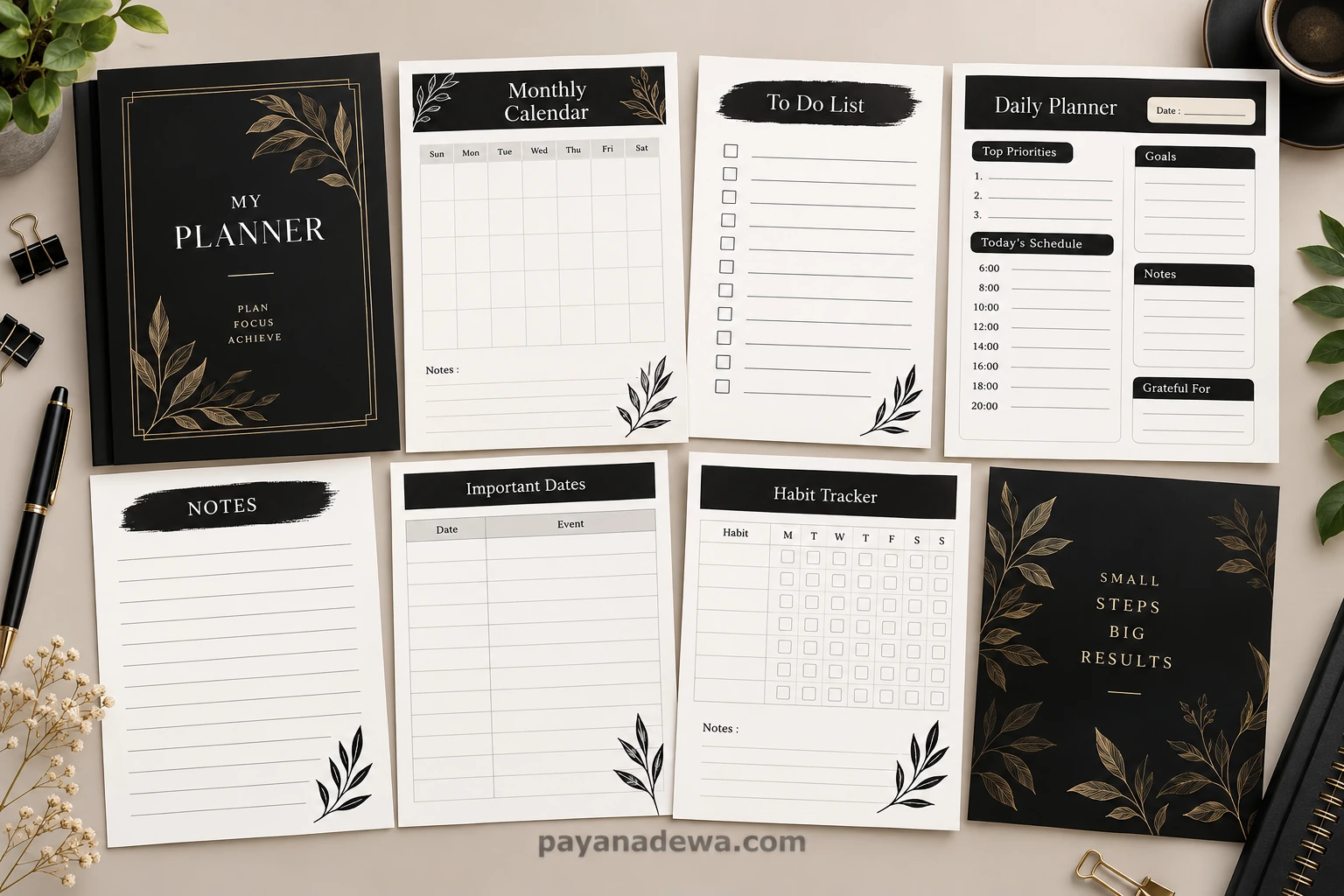
A black planner template can include daily schedules, weekly planning areas, monthly calendars, priority lists, notes, and habit trackers. Black headings can separate each section while leaving the writing areas clean and bright.
For everyday planning, consider including sections such as:
- Daily priorities
- Appointments and schedules
- Important tasks
- Personal notes
- Goals and action steps
- Habit tracking
Black Calendar Template
A black calendar template can provide a simple way to organize appointments, deadlines, birthdays, events, and other important dates. A dark header combined with a light calendar grid can make the page visually clear.
Monthly calendar layouts are especially useful because they provide a quick overview of upcoming commitments. You can also add a notes section below the calendar for reminders and planning details.
Black Checklist Template
A checklist is another practical format for a black template. Use bold black headings for the title and smaller black elements for checkboxes or section labels. Keep the actual task area spacious so users have enough room to write.
Checklists can be used for shopping, project management, household routines, travel preparation, school assignments, and many other activities.
How to Create an Effective Black Template
Creating a useful black template involves more than simply changing the background color to black. Good template design depends on readability, spacing, hierarchy, and consistency.
Start With a Clear Purpose
Before designing the page, decide what the template is supposed to accomplish. A daily planner requires a different structure from a business worksheet or printable checklist.
Write down the information users need to enter. Then arrange those elements in a logical order. This prevents unnecessary sections from taking up valuable space.
Use Contrast Carefully
Contrast is one of the most important principles when working with black. White or light backgrounds can provide comfortable writing areas, while black can be reserved for titles, headers, borders, and selected accents.
If you use white text on black, make sure the font is large enough and the contrast is strong. Avoid decorative fonts that become difficult to read when placed against a dark background.
Leave Enough White Space
White space gives a template room to breathe. It separates sections and makes the document easier to scan. Even a highly decorative black template should include open areas where the user can write or add information.
A crowded page can feel confusing even when every individual element is attractive. Simple spacing often improves the usefulness of a printable design more than additional decoration.
Benefits of Using a Black Printable Template
Printable templates can make everyday organization more convenient. A ready-made structure means you do not have to spend time designing every page from scratch.
Saves Time
A template provides an existing framework. You can simply enter your information, print the page, or modify the layout to match your requirements.
This is particularly useful when you frequently create similar documents. Instead of rebuilding a planner, checklist, or worksheet every time, you can keep a reusable template and update it when needed.
Creates a Consistent Appearance
Consistency is valuable for both personal and professional documents. Using the same typography, spacing, headings, and visual elements can make multiple pages look like part of the same collection.
A consistent black template style can be especially useful for planners, business worksheets, classroom materials, project documents, and printable organizational tools.
Easy to Customize
A good template should provide a foundation rather than restrict creativity. You can change headings, add sections, remove unnecessary fields, or adjust the page size depending on the project.
You can also introduce subtle accent colors while keeping black as the primary visual element. Gold, beige, gray, muted green, and soft blue can work well when used sparingly.
Tips for Designing a Professional Black Template
A professional-looking template usually depends on simple design decisions rather than complicated graphics. The goal is to make the document attractive while keeping it practical.
Choose Readable Fonts
Use clear fonts for the main body text. Decorative typography can be useful for a title, but long paragraphs and instructions should remain easy to read.
Maintain a clear difference between the title, headings, labels, and body content. This creates a visual hierarchy that helps readers understand the document quickly.
Keep Decorative Elements Simple
Lines, botanical illustrations, geometric shapes, borders, and small icons can add personality to a black template. However, decorative elements should support the content rather than compete with it.
For a printable design, small decorative accents are often enough. A simple leaf illustration or thin border can make a page feel finished without making the layout crowded.
Consider Printing Requirements
Before printing a black template, check the margins and page dimensions. Make sure important information does not sit too close to the edge of the paper.
If the template contains large black areas, consider creating a printer-friendly version with lighter backgrounds. This gives users more flexibility and can help reduce ink consumption.
Black Template Ideas for Different Uses
The versatility of black design makes it suitable for many projects. A single visual style can be adapted to personal organization, education, business, and creative work.
For Personal Organization
Use a black printable template for daily planning, weekly goals, meal planning, habit tracking, budgeting, household chores, or personal notes.
- Daily planner pages
- Weekly schedule sheets
- Monthly calendars
- Habit trackers
- Goal-setting worksheets
- To-do lists
For School and Study
Students can use black templates for study schedules, assignment tracking, revision plans, reading logs, project checklists, and class notes.
A structured worksheet can make it easier to divide large assignments into smaller steps. Black section headers can help students quickly identify subjects, deadlines, and priorities.
For Business and Work
Businesses can adapt black templates for meeting notes, project planning, task management, client information, schedules, and internal checklists.
A clean black-and-white layout can also provide a professional appearance without relying on excessive graphics. This makes it suitable for documents that need to be printed or shared digitally.
For Creative Projects
Designers and content creators can use black templates as starting points for posters, presentation worksheets, social media planning pages, mood boards, and printable resources.
The strong contrast of black makes it especially useful when you want headings or key information to attract attention.
How to Customize a Black Template
Customization should begin with the content rather than decoration. First determine what information belongs on the page, then adjust the design around those requirements.
Change the Sections
Remove sections that you do not need and add fields that are important to your workflow. For example, a daily planner might include priorities, schedule, notes, and gratitude, while a project planner might need deadlines, owners, milestones, and status.
Adjust the Typography
Changing the font family, size, and weight can significantly alter the appearance of a black template. Keep the typography consistent so the document remains visually organized.
Add Personal Branding
For professional use, you can add a logo, website, business name, or contact information. Keep branding subtle so that it does not distract from the primary content.
Common Mistakes to Avoid
Even an attractive black template can become difficult to use when design choices are not balanced.
Using Too Much Black
A completely dark page may look dramatic on a screen, but it can be less practical for printing and writing. Use black strategically and preserve light areas for the main content.
Ignoring Readability
Small text, low contrast, tight spacing, and overly decorative fonts can make a template frustrating to use. Always check the document at its actual printing size.
Adding Too Many Elements
More decoration does not necessarily create a better template. Remove visual elements that do not improve organization, communication, or usability.
Final Thoughts on Black Template Design
A black template can combine visual simplicity with practical organization. From planners and calendars to checklists, worksheets, and professional documents, black can provide a strong foundation for a wide range of printable designs.
The most effective designs balance dark visual elements with readable typography, generous white space, clear sections, and practical writing areas. This approach keeps the template attractive without sacrificing functionality.
When creating or customizing a black printable template, focus first on the user’s needs. Choose the right sections, establish a clear hierarchy, use contrast thoughtfully, and keep decorative details under control.
With these principles, a black template can become more than an attractive page. It can become a reusable organizational tool that helps people plan, record information, manage tasks, and stay focused.