A well-planned Birthday Program can turn an ordinary birthday gathering into an organized, enjoyable, and memorable celebration. Whether you are planning a child’s birthday party, a family celebration, an adult birthday event, or a small gathering with friends, having a clear program helps everyone know what to expect.
A birthday celebration usually includes several activities, such as welcoming guests, opening remarks, games, entertainment, meals, cake cutting, photography, and gift giving. Without a simple schedule, these activities can easily overlap or become confusing. A birthday program provides a practical way to arrange everything in the right order.
Using a Birthday Program Template can make the planning process even easier. Instead of creating a schedule from scratch, you can start with a structured format and customize the details according to your event. You can add the birthday person’s name, date, venue, activities, meal times, entertainment, and other important information.
A good program should not make a birthday party feel too formal. Its purpose is to provide direction while leaving enough flexibility for spontaneous moments. The best birthday events combine organization with fun, allowing guests to enjoy themselves without constantly checking the clock.
Whether you are preparing a simple home party or a larger birthday celebration, the following guide explains how to create an effective birthday program and how to make each part of the event flow smoothly.
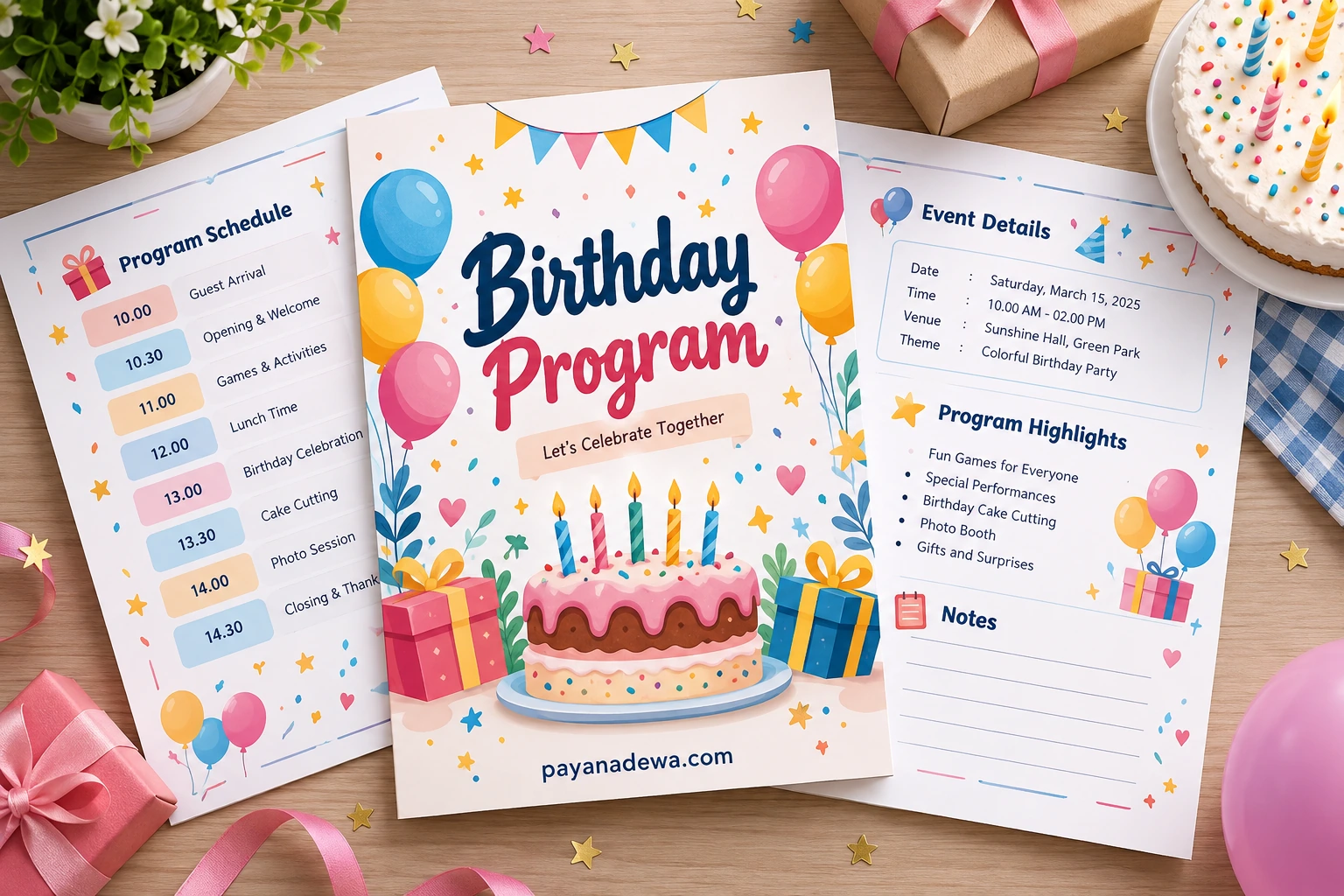
What Is a Birthday Program?
Understanding the Purpose of a Birthday Program
A birthday program is a structured schedule that outlines the main activities planned for a birthday celebration. It helps the host, guests, entertainers, and other participants understand how the event will progress from beginning to end.
The format can be as simple as a short list of activities or as detailed as a complete event schedule. For example, a small family party may only need guest arrival, games, dinner, cake cutting, and closing. A larger celebration may require a more detailed timeline with speeches, performances, photo sessions, competitions, and presentations.
The most important purpose of a birthday program is organization. When activities have an approximate time and sequence, the host can reduce unnecessary delays and make better use of the available venue and resources.
Why Use a Birthday Program Template?
A template provides a ready-made structure for organizing a birthday event. Instead of spending hours deciding how to arrange every section, you can customize an existing layout and focus on the actual celebration.
A printable birthday template can also be shared with family members, event organizers, volunteers, entertainers, or guests. This is particularly helpful when several people are responsible for different parts of the event.
- It creates a clear event schedule.
- It helps prevent important activities from being forgotten.
- It makes coordination easier.
- It provides a useful reference for the host.
- It can be customized for different birthday themes.
Essential Sections of a Birthday Program
Event Information
Start the birthday program with the most important event information. Include the birthday person’s name, celebration date, starting time, venue, and party theme if applicable.
This section provides immediate context for anyone reading the program. If the document is distributed before the event, guests can quickly understand the basic details without searching through separate messages or invitations.
Guest Arrival and Welcome
The first scheduled activity should usually allow enough time for guests to arrive. Depending on the event, you can include registration, greetings, seating, refreshments, or a simple welcome activity.
A flexible arrival period is useful because guests rarely arrive at exactly the same time. Avoid making the schedule too strict during the first part of the celebration.
Opening and Introduction
After most guests have arrived, the host can officially open the celebration. The opening may include a welcome speech, introduction of the birthday person, a short message from the family, or an explanation of the day’s activities.
For children’s parties, the opening can be brief and energetic. For milestone birthdays, an introduction may include a short story about the birthday person or an appreciation message from family and friends.
Games and Entertainment
Games and entertainment are often the most interactive parts of a birthday celebration. Depending on the age and interests of the guests, the program can include party games, quizzes, music, dancing, performances, contests, or creative activities.
- Birthday trivia
- Musical games
- Treasure hunts
- Team competitions
- Dance activities
- Talent performances
- Photo booth sessions
Try to balance active games with quieter activities. A program that contains too many high-energy games may make younger guests tired, while a schedule that is too quiet may feel less engaging.
How to Create an Effective Birthday Program
Determine the Total Event Duration
Before creating the detailed schedule, decide how long the birthday celebration will last. A children’s party may take two to three hours, while a family dinner or milestone birthday can continue for several hours.
Knowing the total duration helps you determine how much time should be allocated to each activity. It also prevents the program from becoming overloaded with too many activities.
Arrange Activities in a Natural Sequence
A practical birthday program should follow the natural flow of a celebration. Guest arrival should come before the opening, while cake cutting and gift giving usually happen after guests have had enough time to settle in.
A simple sequence could be guest arrival, welcome, icebreaker activity, games, meal, entertainment, birthday wishes, cake cutting, photography, gift giving, and closing.
This sequence is only a starting point. You can rearrange activities according to the needs of the birthday person, venue, guests, and theme.
Leave Space Between Activities
One common planning mistake is creating a schedule that is too tight. If every activity is scheduled back-to-back with no flexibility, even a small delay can affect the entire event.
Leave several minutes between major activities whenever possible. This gives the host time to make announcements, prepare equipment, move guests, serve food, or handle unexpected changes.
Birthday Cake Cutting and Special Moments
Planning the Cake Ceremony
Cake cutting is one of the most recognizable moments in a birthday celebration. It can be placed toward the middle or later part of the program depending on the event.
Before the cake is brought out, make sure candles, a lighter, serving utensils, plates, and other necessary items are ready. If photography is important, allow guests to gather around the birthday person before the candles are blown out.
Birthday Wishes and Messages
For family celebrations and milestone birthdays, consider including a dedicated time for birthday wishes. Guests can share short messages, memories, congratulations, or personal stories.
To keep the event moving, the host can establish an approximate time limit for each speaker. This is especially helpful when many family members or friends want to participate.
Tips for Different Types of Birthday Celebrations
Children’s Birthday Party
A children’s birthday program should focus on simple instructions, active games, colorful activities, and short transitions. Young guests may lose interest when an activity takes too long, so keep each section age appropriate.
Include opportunities for movement, snacks, creative activities, cake cutting, and photographs. A flexible schedule is particularly important because children’s reactions can be unpredictable.
Adult Birthday Celebration
An adult birthday program can include dinner, live music, speeches, games, presentations, photo sessions, and social activities. The schedule can be more relaxed, especially when the celebration focuses on conversation and spending time together.
For milestone birthdays, consider adding a memory presentation, slideshow, video messages, or a short appreciation session from friends and family.
Family Birthday Gathering
A family birthday celebration can combine formal and casual elements. The program might begin with a welcome, followed by a meal, family games, birthday wishes, cake cutting, photographs, and free social time.
When several generations attend, choose activities that are accessible to different ages. The goal is to create shared moments rather than making the program complicated.
How to Make a Birthday Program More Useful
Keep the Layout Easy to Read
A birthday program should be visually clear. Use short activity names, readable fonts, sufficient spacing, and a logical order. Avoid filling the page with too much information.
If you are creating a printable birthday program, use headings and time labels to help readers locate information quickly. Important details can be emphasized using bold text.
Customize the Program to the Theme
The visual style of the program can match the birthday party theme. A children’s celebration may use playful illustrations, while an elegant adult birthday may use a simple and sophisticated design.
Matching the program to the event theme creates a more cohesive experience. You can coordinate colors, decorative elements, typography, and illustrations with the invitations and other party materials.
Prepare a Digital and Printable Version
Keeping a digital copy of the birthday program is useful for the event organizer and family members. A printable version can be placed at the entrance, on tables, or near the main activity area.
Having both formats also makes it easier to update the schedule if the venue, timing, or activities change before the celebration.
Sample Birthday Program Schedule
A Simple Two-to-Four-Hour Birthday Program
Here is an example of how a birthday celebration can be organized. The times can be adjusted based on the event’s actual duration.
- 10:00 AM: Guest arrival and welcome
- 10:30 AM: Opening and birthday introduction
- 11:00 AM: Games and group activities
- 12:00 PM: Lunch or refreshments
- 12:30 PM: Entertainment and special performances
- 1:00 PM: Birthday wishes and messages
- 1:15 PM: Cake cutting and birthday song
- 1:30 PM: Gift giving and photo session
- 2:00 PM: Closing and thank-you message
This sample schedule is only a guide. The best program depends on the birthday person’s preferences, guest list, venue, activities, and available time.
Common Mistakes to Avoid When Planning a Birthday Program
Adding Too Many Activities
More activities do not automatically make a birthday party better. A crowded schedule can make guests feel rushed and prevent them from enjoying conversations and spontaneous moments.
Choose activities that support the overall theme and audience. Leave some free time so guests can relax and interact naturally.
Ignoring the Needs of Guests
Consider the age, mobility, interests, and comfort of the guests when preparing the program. A schedule designed only around the host’s preferences may not work well for everyone.
For example, young children may need regular breaks, while older guests may appreciate comfortable seating and a less physically demanding schedule.
Forgetting Backup Plans
Unexpected changes can happen at almost any birthday event. Outdoor parties may experience weather changes, entertainers may arrive late, or an activity may take longer than expected.
Prepare simple alternatives for important parts of the program. A flexible approach makes it easier to keep the celebration enjoyable even when the original schedule changes.
Why a Printable Birthday Program Template Is Helpful
Easy to Customize and Share
A printable Birthday Program Template provides a convenient starting point for event planning. You can replace placeholder information with your own birthday details and adjust the schedule according to your needs.
Templates can also save time when you are organizing several events. Instead of designing a new program every time, you can reuse a basic structure and modify the colors, activities, names, dates, and other details.
Useful During the Celebration
The finished program can serve as a quick reference throughout the event. The host can check upcoming activities, while helpers can use the schedule to prepare food, decorations, music, games, or equipment.
This simple document can therefore support both the planning stage and the actual celebration.
Conclusion
Create a Birthday Celebration That Flows Smoothly
A thoughtful Birthday Program helps transform a collection of party activities into a coordinated celebration. By planning the timing, arranging activities logically, and leaving enough flexibility, you can create an event that feels organized without becoming overly formal.
Whether you are planning a child’s birthday party, an adult celebration, a family gathering, or a milestone event, a clear program can make the experience easier for everyone involved. Start with the essential details, choose activities that match your guests, and customize the schedule to suit the occasion.
A well-designed Birthday Program Template can make this process even simpler. With a practical layout and a little customization, you can prepare a useful guide that keeps the celebration moving while allowing everyone to focus on what matters most: enjoying the birthday together.