Email marketing remains one of the most practical ways for businesses to communicate with customers, promote products, generate leads, and build long-term relationships. However, successful email advertising requires more than writing a promotional message and pressing send.
A well-planned campaign combines the right audience, valuable content, persuasive design, clear calls to action, and measurable goals. This Advertising Email Marketing Campaign Guide explains how to build an effective email campaign from planning to performance analysis.
Whether you run a small business, online store, service company, or digital marketing agency, these strategies can help you create email campaigns that are more relevant, engaging, and easier to measure.
What Is an Advertising Email Marketing Campaign?
An advertising email marketing campaign is a planned series of emails designed to promote a product, service, offer, event, website, or brand. Unlike random promotional emails, a campaign has a specific objective and a defined audience.
For example, a business might create an email campaign to launch a new product. Another company may use email advertising to promote a seasonal discount. A service provider could use a campaign to generate qualified leads.
The strongest campaigns usually connect several elements:
- A clearly defined target audience
- A specific marketing objective
- A compelling email subject line
- Useful and persuasive content
- A strong call to action
- Mobile-friendly email design
- Tracking and performance measurement
When these elements work together, email becomes more than a communication channel. It becomes a measurable part of a broader digital marketing strategy.
How to Plan an Advertising Email Marketing Campaign
Planning should happen before you write the first email. A clear campaign structure helps prevent inconsistent messaging and makes performance easier to evaluate.
1. Define Your Campaign Goal
Start with one primary objective. Your goal should be specific enough to measure.
Common email marketing objectives include:
- Increasing product sales
- Generating new leads
- Driving website traffic
- Promoting a special offer
- Increasing event registrations
- Re-engaging inactive subscribers
- Building brand awareness
- Increasing customer retention
For example, instead of saying “increase engagement,” define a measurable target such as increasing click-throughs to a product page during a specific campaign period.
2. Identify Your Target Audience
A single email rarely works equally well for every subscriber. Audience segmentation allows you to send more relevant messages to different groups.
You can segment subscribers based on factors such as purchase history, interests, location, engagement level, customer type, or previous interactions with your business.
For example, new subscribers may receive a welcome sequence, while existing customers receive product recommendations or loyalty offers. Inactive subscribers may receive a re-engagement campaign.
The more relevant the message is to the recipient, the easier it becomes to create meaningful engagement.
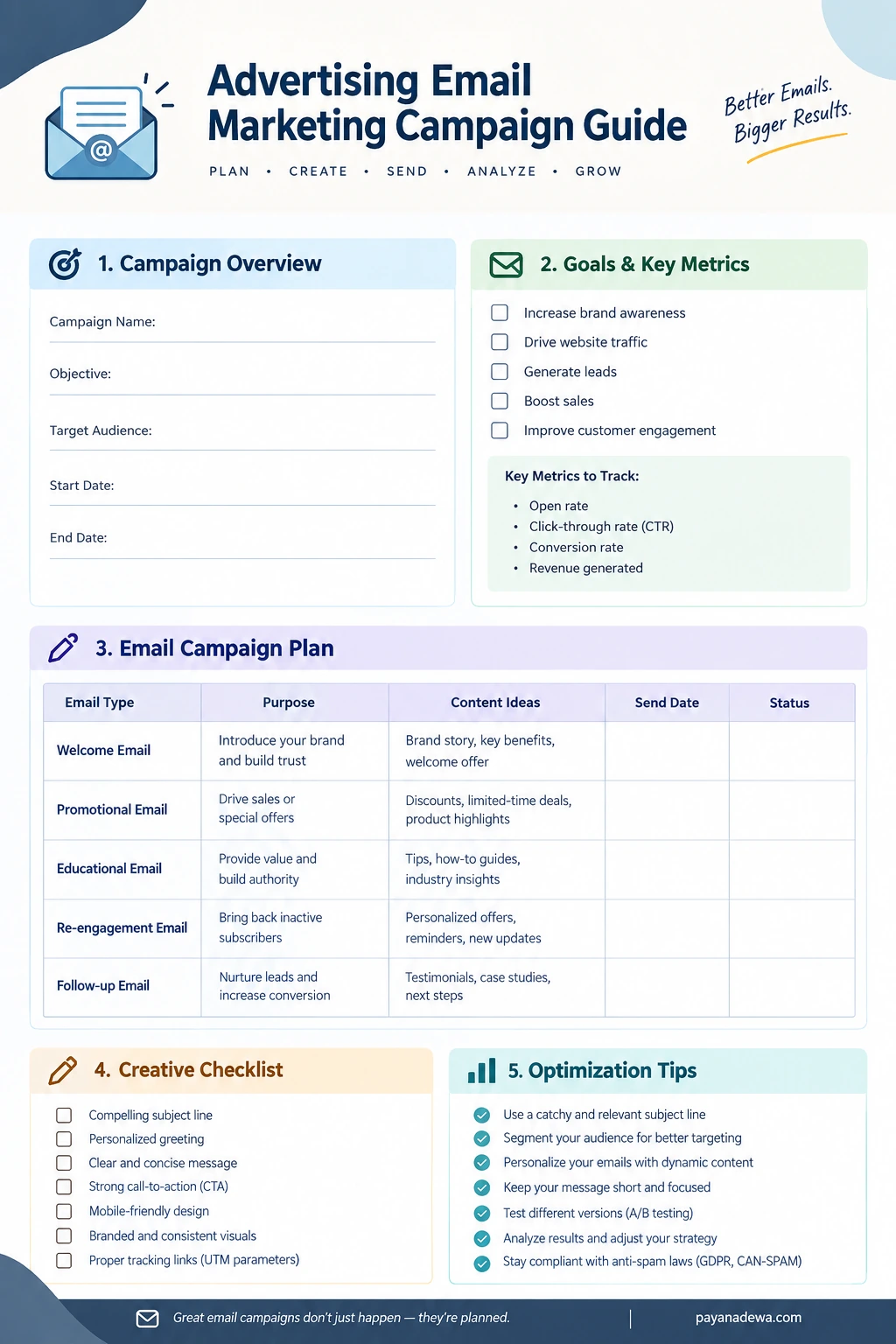
How to Create an Effective Email Campaign
3. Write a Strong Subject Line
The subject line is one of the first things subscribers see. It should clearly communicate why opening the email is worthwhile.
Good subject lines are usually concise, specific, and relevant to the recipient. Avoid misleading claims or excessive punctuation because they can reduce trust.
Consider using subject lines that highlight a benefit, create curiosity, announce useful information, or communicate a genuine deadline.
Examples include:
- Discover Our New Collection Today
- Your Exclusive Member Offer Is Here
- Save More on Your Next Order
- 5 Simple Ways to Improve Your Marketing
- Your Guide to Better Email Campaigns
Whenever possible, test different subject lines to discover which messaging produces stronger engagement with your specific audience.
4. Create Useful and Persuasive Email Content
Your email should deliver value quickly. Readers often scan emails instead of reading every sentence, especially on mobile devices.
Keep the main message focused on one central idea. Use short paragraphs, descriptive headings, and clear language.
A promotional email might include the problem, the solution, the main benefit, and a call to action. An educational email can introduce a problem, provide practical advice, and direct readers to a more detailed resource.
Strong email content should answer one important question: Why should the reader care?
5. Add a Clear Call to Action
Every advertising email should have a clear next step. This is usually presented through a call-to-action button or prominent text link.
Examples include:
- Shop Now
- Get Your Discount
- Learn More
- Book a Consultation
- Download the Guide
- Register Today
Avoid giving every link equal importance. One primary call to action usually makes the email easier to understand and can create a clearer customer journey.
Email Marketing Campaign Types
Different campaign goals require different email formats. Choosing the right campaign type helps your message match the customer’s stage in the buying journey.
Welcome Email Campaigns
Welcome emails introduce new subscribers to your brand. They can explain what subscribers should expect, highlight important resources, and present a first-purchase incentive when appropriate.
Promotional Email Campaigns
Promotional campaigns focus on products, services, discounts, seasonal offers, or limited-time promotions. The offer should be easy to understand and supported by a clear call to action.
Educational Email Campaigns
Educational emails provide useful information rather than focusing entirely on sales. Tutorials, tips, industry insights, and how-to content can help establish credibility and maintain audience engagement.
Re-Engagement Campaigns
Re-engagement emails target subscribers who have stopped opening or clicking emails. A simple reminder, new benefit, preference update, or relevant offer can encourage inactive subscribers to interact again.
Follow-Up Campaigns
Follow-up emails help move prospects or customers toward the next stage. They can answer common questions, provide additional information, share testimonials, or remind customers about an unfinished action.
Optimize Your Email Advertising Strategy
Use Personalization
Personalization can make an email feel more relevant. Depending on your data and email platform, personalization may include a subscriber’s name, product interests, previous purchases, or recommended content.
However, personalization should serve a useful purpose. Adding personal information simply for attention can feel unnatural. Focus on relevance rather than using personalization everywhere.
Design for Mobile Devices
Many people read emails on smartphones. Therefore, responsive design should be part of every email marketing campaign.
Use readable text, sufficient spacing, clear buttons, and images that scale correctly. Keep important information near the top so readers can understand the message quickly.
Use A/B Testing
A/B testing allows marketers to compare different versions of an email. You might test the subject line, call to action, headline, offer, layout, or send time.
Change one major variable at a time when possible. This makes it easier to understand which element influenced the result.
Key Email Marketing Metrics to Track
Sending an email is only the beginning. Performance analysis helps you understand what worked and what should change in future campaigns.
Open Rate
Open rate measures the percentage of delivered emails that were opened. It can provide useful directional information about subject lines and audience engagement, although modern privacy features can affect how opens are measured.
Click-Through Rate
Click-through rate measures how many recipients clicked a link or call to action. It can help indicate whether the email content and offer encouraged further action.
Conversion Rate
Conversion rate measures the percentage of recipients who completed the desired action after interacting with the campaign. Depending on your goal, a conversion could be a purchase, registration, download, or lead submission.
Revenue and Return on Investment
For commercial campaigns, revenue and return on investment can provide a clearer picture of business impact. Compare campaign costs with the revenue or value generated from the campaign.
Unsubscribe and Bounce Rates
Unsubscribe rates can provide signals about content relevance and email frequency. Bounce rates can highlight problems with email addresses or list quality.
Common Email Marketing Mistakes to Avoid
Even well-designed campaigns can perform poorly when basic problems are overlooked.
- Sending without a clear objective: Every campaign should have a defined purpose.
- Ignoring audience segmentation: Generic messages may be less relevant to subscribers.
- Using weak calls to action: Readers should understand what to do next.
- Overloading the email: Too many messages can make the main offer difficult to find.
- Ignoring mobile users: Poor mobile design can create unnecessary friction.
- Failing to test: Small improvements can be discovered through structured testing.
- Neglecting tracking: Without measurement, it is difficult to improve future campaigns.
- Ignoring compliance: Follow applicable email marketing, privacy, consent, and anti-spam requirements.
Practical Advertising Email Marketing Campaign Checklist
Before sending your campaign, review the following checklist:
- Define the campaign objective.
- Identify the target audience.
- Segment subscribers when appropriate.
- Write a relevant subject line.
- Keep the email focused on one main message.
- Check spelling, grammar, and links.
- Add a clear call to action.
- Test the email on mobile devices.
- Check images and formatting.
- Confirm tracking parameters.
- Review the sending schedule.
- Make sure the campaign follows applicable email marketing regulations.
- Monitor performance after sending.
- Use the results to improve the next campaign.
How to Build a Better Email Campaign Over Time
Successful email marketing is an ongoing process. A single campaign rarely provides enough information to build a complete strategy.
Instead, review campaign performance regularly and look for patterns. Identify which topics generate clicks, which offers create conversions, and which audience segments respond most strongly.
Use those insights to improve future campaigns. You can gradually refine your subject lines, content, segmentation, offers, design, and sending frequency.
It is also useful to maintain a campaign calendar. A simple calendar can show upcoming promotions, educational emails, product announcements, seasonal campaigns, and follow-ups. This helps prevent rushed campaigns and inconsistent communication.
Conclusion
A successful Advertising Email Marketing Campaign Guide strategy starts with planning and continues with testing, measurement, and improvement. The goal is not simply to send more emails. The goal is to send more relevant emails to the right audience with a clear purpose.
Start by defining your objective and audience. Then create useful content, write a compelling subject line, add a focused call to action, and optimize the experience for mobile users. After sending, measure meaningful metrics and use the results to improve your next campaign.
With consistent testing and thoughtful audience targeting, email marketing can become a valuable channel for generating leads, increasing sales, strengthening customer relationships, and supporting long-term business growth.