An Advertising Contract is a written agreement between an advertiser and an advertising provider. It explains the terms of an advertising campaign. It also defines the duties of both parties.
A clear advertising agreement can prevent confusion. It can also make business communication easier. For this reason, both parties should understand the terms before signing.
An advertising contract can cover many services. These services may include online ads, social media promotions, print ads, sponsored content, or advertising space.
In this guide, you will learn what an Advertising Contract is. You will also learn what to include, how to use a template, and what to check before signing.
What Is an Advertising Contract?
An Advertising Contract is a formal agreement between two parties. Usually, one party is the advertiser. The other party provides advertising services or advertising space.
The contract explains the details of the business relationship. It can define the services, prices, deadlines, and responsibilities.
For example, a company may hire an agency to manage a digital advertising campaign. The contract can explain the campaign period, advertising budget, services, and payment schedule.
Likewise, a website owner may sell advertising space to a business. In this case, the agreement can describe the ad placement, size, duration, and price.
Why Do You Need an Advertising Contract?
Advertising projects often involve many details. These details can include deadlines, payments, creative work, and approvals.
Without a written agreement, people may remember the deal differently. As a result, misunderstandings can occur.
An Advertising Contract gives both parties a clear reference. It puts important terms in one document.
- Clear responsibilities: Each party knows what it must do.
- Clear payment terms: The contract explains fees and payment dates.
- Clear deadlines: Both parties can track important dates.
- Clear deliverables: The agreement explains what the advertiser will receive.
- Better communication: Everyone can refer to the same terms.
- Lower risk of disputes: Written terms can reduce confusion.
However, a contract does not prevent every possible dispute. Therefore, the agreement should use clear and specific language.
For important commercial agreements, consider professional legal advice. Contract rules can also differ between countries and jurisdictions.
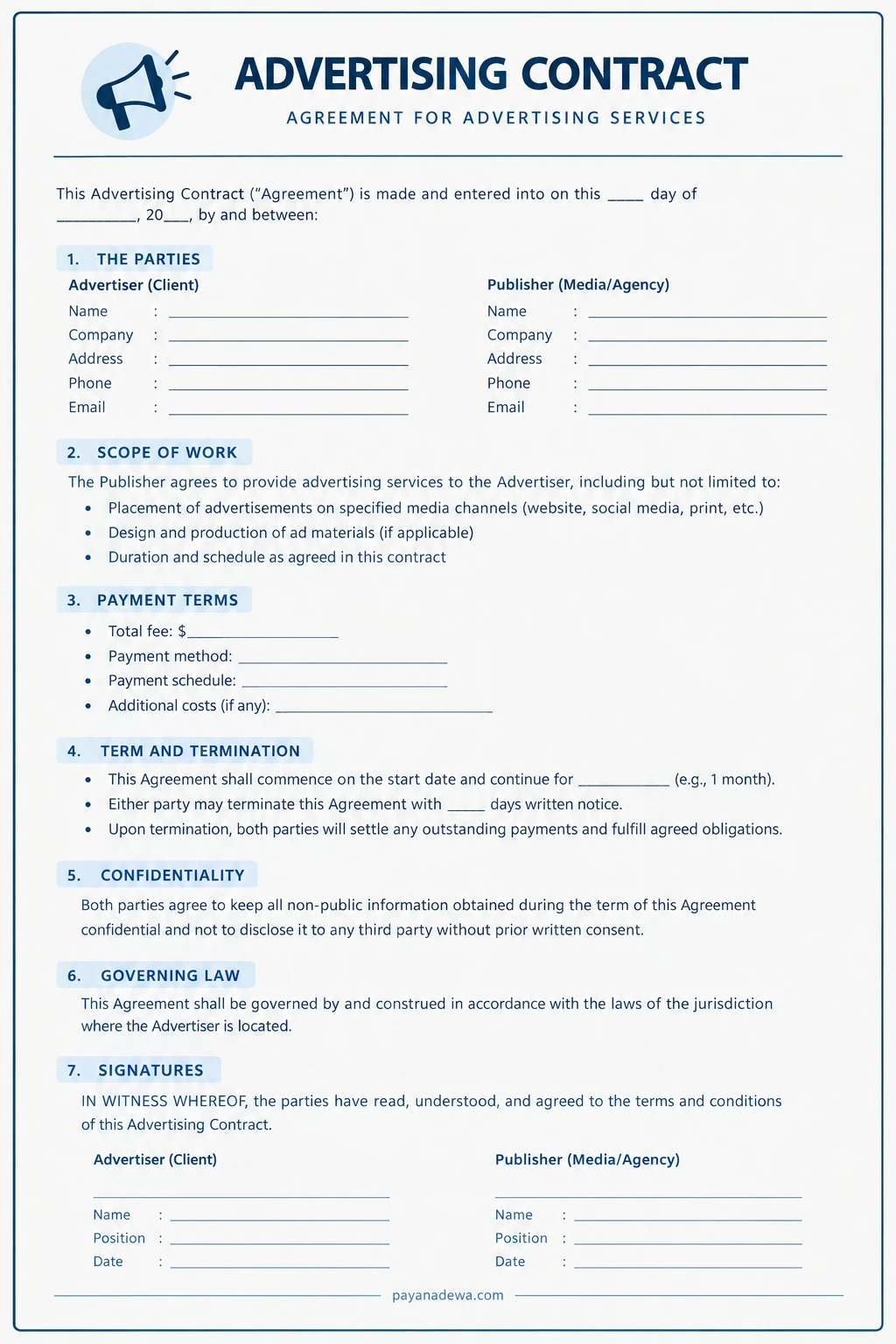
What Should an Advertising Contract Include?
A good advertising agreement should cover the main parts of the business relationship. The exact terms may vary from one campaign to another.
Still, several sections are useful for most advertising contracts.
1. Names of the Parties
First, identify everyone who will sign the agreement. Use the correct legal or business names.
You can include the following details:
- Full name
- Company name
- Business address
- Email address
- Phone number
- Name of the authorized representative
Correct information makes the agreement easier to understand. It also helps identify who has contractual responsibilities.
2. Description of Advertising Services
Next, describe the advertising services in detail. Avoid vague descriptions.
For example, the agreement may cover website banners, social media ads, sponsored articles, video ads, or print advertisements.
You can also describe the number of ads, placement, size, format, and campaign frequency.
The more specific the description is, the easier it becomes to measure the agreed deliverables.
3. Advertising Campaign Schedule
Every campaign needs a clear schedule. Therefore, include the start date and end date.
You may also include important milestones. These milestones can include content submission, approval, publication, reporting, and final delivery.
For example, an advertiser may need to approve an advertisement before publication. The contract can state how many days the advertiser has to provide approval.
This approach can help prevent unnecessary delays.
4. Advertising Fees and Payment Terms
Payment terms are another important part of an Advertising Contract. The agreement should clearly explain the total cost.
It should also explain when and how the advertiser will pay.
- Total advertising fee
- Deposit amount
- Payment due dates
- Payment method
- Taxes and applicable charges
- Production costs
- Third-party costs
- Late payment terms
If extra services may create additional costs, explain the approval process. This step can help prevent unexpected charges.
5. Advertising Materials
The contract should explain who provides the advertising materials.
The advertiser may provide images, logos, videos, product information, and written content. Alternatively, the advertising provider may create some or all of these materials.
Make the responsibility clear. Also, explain when the materials must be delivered.
6. Approval and Revision Process
Many advertising campaigns require client approval. Therefore, the contract should explain how the approval process works.
It can also define the number of revisions included in the agreed price.
For example, the agreement may include two rounds of revisions. Additional revisions may require an extra fee.
This simple rule can make the workflow easier for everyone.
7. Intellectual Property Rights
Advertising projects often include creative materials. These materials may include graphics, photographs, videos, copy, logos, and other content.
The contract should explain who owns these materials. It should also explain how each party can use them.
For example, the advertiser may own the final creative work after full payment. In another arrangement, the advertiser may receive a limited license.
Clear intellectual property terms can reduce confusion after the campaign ends.
8. Confidentiality
An advertising project may involve private business information. For example, the advertiser may share a new product plan or marketing strategy.
A confidentiality section can explain how the parties should handle this information.
The clause may define confidential information and explain when disclosure is allowed.
Advertising Contract Term and Termination
An Advertising Contract should explain how long the agreement will remain active.
Some agreements cover one campaign. Others continue for several months or years.
The contract should also explain how either party can end the agreement.
Important Termination Details
Consider addressing the following questions:
- When does the agreement begin?
- When does the agreement end?
- How much notice is required?
- Can either party terminate the contract early?
- What happens to prepaid fees?
- Who pays for completed work?
- What happens to scheduled advertisements?
- What happens to confidential information?
Clear termination terms can make the process easier if the business relationship ends early.
Common Types of Advertising Contracts
Advertising contracts can cover many different services. The structure may change based on the advertising channel.
Digital Advertising Contract
A digital advertising contract covers online advertising services. It may include search ads, display ads, social media ads, or website promotions.
The agreement can define the campaign budget, advertising channels, reporting, and campaign period.
Advertising Agency Contract
An advertising agency contract covers services provided by a marketing or advertising agency.
These services may include strategy, creative development, media buying, campaign management, and performance reporting.
Influencer Advertising Agreement
An influencer advertising agreement covers sponsored promotional content.
It may define the number of posts, videos, publishing dates, payment, content requirements, approval rules, and usage rights.
Advertising Space Agreement
An advertising space agreement applies when a business rents advertising space.
The space may appear on a website, billboard, magazine, newspaper, newsletter, or other media property.
How to Write a Clear Advertising Contract
A useful contract should be detailed but easy to read. You do not need complicated language to create clear terms.
Use Specific Language
State exactly what each party must provide. Avoid unclear phrases such as “regular advertising” or “reasonable promotion.”
Instead, describe the actual service, number of advertisements, placement, and campaign period.
Set Clear Deadlines
Deadlines help keep the campaign on schedule. Therefore, include dates for important tasks.
These tasks may include content delivery, approval, publication, payment, and reporting.
Explain Extra Costs
Advertising projects can sometimes require additional work. The contract should explain how extra costs will work.
For example, you can require written approval before starting additional paid services.
Keep the Agreement Organized
Use clear headings and short sections. This structure makes important information easier to find.
A well-organized document can also improve communication between the advertiser and the advertising provider.
How to Use an Advertising Contract Template
An Advertising Contract Template can save time during the drafting process. It provides a basic structure for the agreement.
A template can include sections for the parties, advertising services, payment, campaign dates, termination, confidentiality, and signatures.
However, you should customize the template before using it.
Start by replacing the sample information with the correct business details. Next, add the actual services and campaign terms.
Then, review the payment section. Make sure the price and payment schedule match the business agreement.
Finally, review the legal provisions and signature section.
A template is a starting point. It may not address every requirement for your specific situation.
Advertising Contract Checklist
Before signing an advertising agreement, review the document carefully.
- Check the names of all parties.
- Confirm the advertising services.
- Review the campaign dates.
- Check the advertising placement.
- Confirm the number of deliverables.
- Review the total advertising fee.
- Check payment dates and methods.
- Review additional costs.
- Confirm approval and revision rules.
- Review intellectual property terms.
- Check confidentiality requirements.
- Review termination conditions.
- Confirm the governing law.
- Make sure all required parties sign the agreement.
If you find unclear terms, ask questions before signing. Do not rely only on a verbal agreement when the issue affects the contract.
Practical Tips for Advertisers and Advertising Providers
Tips for Advertisers
Advertisers should confirm that the contract matches their campaign goals. Check the services, deadlines, costs, and expected deliverables.
Also, review content ownership and usage rights. These terms can affect how you use advertising materials after the campaign.
Tips for Advertising Providers
Advertising providers should define their services clearly. They should also explain payment requirements and client responsibilities.
For example, state when the client must provide materials or approve content. This information can help keep the campaign moving.
What to Check Before Signing an Advertising Contract
Take time to read the complete agreement. Do not focus only on the price.
Check the scope of work first. Then, review the campaign schedule and payment terms.
Next, examine the sections about intellectual property, confidentiality, revisions, and termination.
Make sure the written agreement reflects the actual deal. If something important is missing, discuss it before signing.
For large campaigns or complex business relationships, professional legal review may be appropriate.
Conclusion
An Advertising Contract creates a clear framework for an advertising relationship. It explains the services, costs, deadlines, responsibilities, and other important terms.
A good agreement can make the campaign easier to manage. It can also reduce confusion between the advertiser and the advertising provider.
An Advertising Contract Template can provide a useful starting point. However, you should customize the document for each campaign.
Before signing, review every section carefully. Make sure both parties understand their responsibilities and obligations.
For complex or high-value agreements, consider getting advice from a qualified legal professional. This extra step can help you create an agreement that fits your specific business needs.